Showing posts with label Agriculture. Show all posts

Tuesday, May 17, 2011

Farm Machinery Rules of the Road

Farm safety is a topic very near and dear to my heart. Being a farm girl I've seen firsthand the consequences suffered by family, friends and neighbors who were too caught up in their task to think about safety. While every situation may not be preventable, a little knowledge and good ol' common sense can go a long way in keeping farmers healthy and safe.

Farmers and ranchers face an array of on-the-job hazards including being crushed or entangled by heavy machinery such as combines and balers, kicked or trampled by livestock, trapped inside silos or grain elevators, and exposed to toxic levels of pesticides and other chemicals. All this while working extremely long hours during planting and harvest seasons. All of these hazards make farming and ranching the 4th most dangerous occupation in the country (the U.S. Bureau of Labor Statistics says so).

Because I feel so strongly about ag safety awareness, my blog will occasionally feature information and tidbits like this. I'm not an expert and I'm certainly not preaching from a soapbox. It's just some things to think about.
 
Roadway safety is especially important for farmers who share the road with a general public increasingly unaware of farm machinery maneuverability/speed limitations. It’s increasingly necessary to be seen and be recognized by motorists. Because tractors, and the implements being pulled behind them, usually travel less than 25 MPH, making sure that they are clearly marked will help motorists see them in time to slow down.

  • Make sure that lights are in working order and that all reflectors, including the Slow Moving Vehicle emblem, are in place before traveling. Sometimes it may be necessary to wipe the dust off of these safety devices following field work.
  • If traveling at night, equipment must have two red taillights mounted to the right and left extremities, two good headlights and at least one flashing amber light. An amber flashing light mounted on the far right and left of tractors/ implements, visible to the front and rear, can also increase visibility.
  • Making a left-hand turn across the opposite lane of traffic can be a dangerous task when pulling an implement. Motorists following behind may not understand that a left turn requires a move to the right in preparation for the turn. Use turn signals accordingly and check mirrors that allow you to see behind the tractor or implement before executing the turn. Pulling onto the shoulder and waiting until the roadway is clear of traffic can aid in making this turn as well. A variety of "Ag Cams" are available which can be mounted on the back of large equipment. A video display in the cab then makes it easy for the operator to see in blind spots.
  • As farm equipment grows in size, so does the difficulty of transporting it between fields. If a piece of equipment being pulled extends into the opposite lane of traffic and the driver can’t reasonably move onto the shoulder, escort vehicles should be used. These vehicles, should be at least 500 feet in front and behind the tractor and implement and should operate flashing lights to warn oncoming vehicles.
  • Before entering the roadway, stop and look both directions. Make sure you have enough time to cross the road or enter the road if traffic is coming or is close. It takes a tractor about 10 seconds to cross a road. A car going 55 mph will travel about 800 feet in that time span.

Thursday, April 21, 2011

No Excuse for Animal Abuse

Feeding in a blizzard
Disgusted. Frustrated. Saddened. Disturbed. That's how I felt after watching the latest animal abuse video released by Mercy For Animals (MFA) that displayed horrible, violent acts of animal cruelty on a Texas Dairy Farm. I've never understood abuse of any kind, it's flat out ugly, unacceptable and wrong. Living creatures deserve to be treated with respect and dignity-- whether it's a person or animal.

The animal treatment in the video is no depiction of acceptable animal management, and this isn't the norm in the livestock industry. The majority of producers, including my family, spend long hours caring for our animals the proper way. Come rain, snow or shine farmers are committed to the health, safety and well-being of their livestock. It's not an easy job-- but it's a job most approach with hardwork, dedication and a genuine love for animals.

As an industry we must make it known that the actions depicted in the video will not be tolerated. Animal abuse is wrong. And it must be stopped. Animal abusers must be held accountable for their actions and we in the industry must lead the way in setting that example. If we don't set the bar ourselves groups like MFA, PETA and HSUS will do it for us. It's time to step up and speak up. 


Want to learn more-- check out these links:

What Farmers are saying about this recent video

National Dairy FARM

AFAN Alliance for the Future of Agriculture in Nebraska

Dairy Faming today

RayLin Dairy Is going Vegan the Answer to Animal Abuse?

Agriculture Proud Quality Food Begins With Quality Animal Care

Cause Matters The Tears I've Shed…. Animal Abuse

Crystal Cattle Animal Abuse in Agriculture

Dairy Innovation Animal abuse: Still a Big No No!

Zweber Farms Video:Calf Care on Zweber Farms December 2010

Zweber Family Farm News Calf and Animal Care is our Number One!

Orange Patch Dairy Too mad to go to bed!

killrocfarms Animal abuse: Never acceptable

Pinke Post Link Up Wordless/Wordful Wednesday: Despite Animal Abuse Headlines

Life as an Iowa Farmwife Animal Abuse, Undercover Videos, and Doing the Right Thing

From the Tractor Seat Animal Abuse

The Ole Cowmilkers Random Thoughts Animal Care

Buzzard's Beat No Excuse

ag – a colorful adventure Hold People to A Higher Standard

Reflections from a Country Boy We Care For Our Livestock!

Loos Tales Interview with the owner of E6 Ranch

Dairy Devotion Why I am doing this.

Jersey Cowgirl So it Goes

Wednesday, April 20, 2011

New Beginnings & Green Pastures

Peaceful spring morning on my drive to work
There's something rejuvenating about spring time on the prairie. The quickly greening pastures are dotted with romping calves, tree rows are starting to bud and farmers are shuffling to get planters to the field. The once lifeless and gloomy winter landscape is coming to life and it's exciting. 

New life is also coming back to my old (and somewhat forgotten) blog. Yes, I was blogger before blogging was cool. I first started with shelbylayne.wordpress.com in 2008 when I was just a whippersnapper at my beloved K-State. I used my blog as a way to showcase my freelance writing and share my passion and experience in agriculture.

Life happened and I became busy with real world big kid type stuff and my blog postings trailed off and eventually it was completely neglected. It wasn't you dear blog-- it was me.

So in the spirit of spring and new beginnings-- my blog is once again greening up. I've made the switch over to blogger to try something new, but all of my old posts came with me.

I can't really say for sure what I'll be posting about and I can't guarantee that it'll be tremendously educational, entertaining, grammatically correct or even worth reading. It'll just be me. 

"The adventure of life is to learn. The goal of life is to grow. The nature of life is to change. The challenge of life is to overcome. The essence of life is to care. The secret of life is to dare. The beauty of life is to give. The joy of life is to love." -William Arthur Ward

Thursday, February 25, 2010

Not your father's cab

New tractors feature tantalizing creature comforts

The future of farming was displayed in full grandeur at the 45th National Farm Machinery Show in Louisville, KY this month. As in the years before, producers dispersed among rows of glistening machinery to catch of glimpse of what’s new. But it’s not just about being bigger or more powerful these days—it’s also about the operator experience.

Helping operators work more comfortably and productively has become an industry wide trend, and the results are visible especially in today’s tractors. Changes in cab design are much more than an extra cup holder or wider seat; every detail is designed to provide superior comfort, convenience and control throughout the workday and best suit the needs of modern producers.

“It’s always exciting to see what new features they come up with for tractors,” says Iowa farmer, Ray Hinkley. “When I first started driving tractor 30 some years ago you never thought about things like comfy seats or controls—it was all about the work, about horse power and pulling equipment.”

For those who have endured the past generations of tractor cabs like Hinkley, the improved designs are a welcome feature. “I remember what is was like to bounce around in a loud tractor cab all day, it would just wear your body down,” Hinkley says. “But with these new tractors and better cabs it’s quiet and comfortable-- some days it hardly feels like work at all.”

Climb into a John Deere 8RT Series tractor and try out the CommandView II Cab. It offers a roomy work environment, easy-to-use monitors and controls and better visibility. The seat is built using cut-and-sew cushion construction, adjustable backrest angle, and lumbar support controls for increased operator comfort. Many of the features and controls that were on the right-hand console have been integrated into the CommandARM. The controls and CommandCenter now follow the operator as the seat swivels for added comfort. The 7-in color display is divided into three regions and can be partially configured by the operator to monitor three tractor functions of their choice. Overall, the series offers 10% more cab volume, 7% more glass area and four times more storage area over the previous CommandView cab.

Relaxing into something red from the Case IH Magnum series is easy with the Surveyor cab. Take in the view with panoramic curved glass; comfortable, positive response seat; and ergonomic armrest controls. The right-hand controls in all Magnum models include: Speed, direction, hydraulics, hitch, PTO and end-of-row switch all within reach, integrated gear/throttle control handle, and an optional electronic joystick. With six power outlets, ample storage, and a large workstation to the left of the seat to holds papers, a laptop computer or other items it could be a functional mobile office.

For those who prefer the blue hue, New Holland’s T7000 tractor offers plenty of creature comforts. The ultra-quiet, high-visibility cab boasts 63 square feet of glass providing an unobstructed view in every direction. A high-visibility roof panel also provides an upward view for loader work. The new Sidewinder II armrest electronically slides forward or back to suit each operator and includes a standard multi-function controller, throttle and electronic draft controls that travel with the seat. Additional features for the cab include a new cool-box option for keeping beverages and snacks chilled and a standard enhanced keypad for tracking engine hours, distance traveled and more.

The AGCO DT Series tractors also stepped up to the plate with a totally new cab design. The 4-post cab has a 28% increase in cab space, giving it the largest cab in its size class. It features more room for the person in the instructor’s seat, a redesigned armrest-mounted console that puts all key functions where they are most convenient and one of the quietest interior sound ratings in the industry at just 71 decibels. With a larger field cooler and a field office that includes a cell phone holder and outlet this cab is ready for hours of work.

Regardless of the size, shape or color it’s obvious that tractor cabs have come a long way over the years. “If it wasn’t for the better equipment and new cabs, I couldn’t keep going like I am,” Hinkley says. “Farming is hard work but the new improvements make it much easier.”

Wednesday, January 20, 2010

Telling the agriculture story in the social media age

Keeping Up


Facebook, Twitter, YouTube, MySpace, LinkedIn.

Chances are you've at least heard of these terms. They are all part of the rapidly growing social media network - the set of free online tools that allow the building of relationships between individuals sharing interests, information and ideas.

But why should farmers and ranchers care? Why should producers take the time to log on to social media? It's pretty simple: social networking sites offer the opportunity to reach millions of people with just a few clicks. These are tools that aren't just for teenagers or the tech savvy anymore. Social media has become mainstream - a place where the agriculture voice is not always heard.

"Social media offers us the ability to reach the 99 percent of the population that isn't in production agriculture," said Debbie Borg, chairman of the Nebraska Soybean Association who farms with her family near Allen, Neb. "When people understand why we do what we do, they are okay with it. But if they don't know, then all they hear is the other side."

Borg joined Twitter in March 2009 (user name @iamafarmer2) she's on Facebook and has a blog (www.ouragstory.blogspot.com). She Tweets about the daily happenings on the farm to followers from around the country.

"The consumer is so removed from the farmer that there is a growing awareness of wanting to know more about their food," Borg said. "It's become very obvious that we in agriculture must start talking with those outside our neighborhoods. Social media is a great way to reach more people with things we do on the farm everyday. If I can educate just one person a day, that's one more person who knows the truth."


It might start with educating just one person, but the numbers and breadth of social media are impressive and still growing.

Facebook, the popular social networking Web site, allows friends, classmates, colleagues and others to connect and share photos, messages and information about their lives with people in their network. It has more than 350 million users, and if it were a country, it would be the fourth largest in the world, according to Nielsen Co.

The newcomer in social networks, Twitter, is a cross between text messaging and blogging, where users are prompted to answer the question, "What are you doing?" in 140 characters or less. The site has grown 200 percent in the past year and estimates more than 26 million users in 2010.

Video sharing Web site YouTube is now the second largest search engine in the world and uploads 13 hours of video every minute of every day.

All of these networks and others can be linked together and even carried with you on your iPhone, BlackBerry or Driod to keep you constantly connected and updated.

"Social media allows us the opportunity to tell our story from the comfort of our own operations instead of having to leave our businesses and travel to speak to the public," said Lincolnville, Kan., rancher, Kim Harms. "In essence, social media outlets allow us to invite the public into our lives, homes, families and businesses to see the truth - not just hear others opinions."

Tuesday, January 5, 2010

Return to the Ranch

Cashing in on individual cattle management


You cannot manage what you cannot measure – the simple principle of the Decatur Beef Alliance which aims to get progressive producers out of the commodity business and into the value-added beef business.

Since 1971 Decatur County Feedyard, just North of Oberlin, Kan, has been in the commercial feeding business under the leadership of owner Warren Weibert. The feedyard has a one-time capacity of 40,000 and is turned over about 1.75 times a year. The focus is on retained ownership customers and improving long-term profitability through information. Decatur County Feedyard began sorting cattle by ultrasound in 1987, and was the first commercial feedlot to sort cattle with a video scanner.

In 1994 the Decatur Beef Alliance was established and the facility invested in Micro beef Technologies’ ACCU-TRAC Electronic Cattle Management System as part of a Total Quality Management approach to beef production.

The alliance enables producers to maximize profit from the genetics bred into the cattle and strengthen the relationship between ranchers, feeders and packers.  The program is rooted in the management principle that beef quality and consistency can’t improve, nor can profits, unless the information necessary for genetic selection is passed back to the producer.

“We focus on individual management,” says Director of Supply Development, Dan Dorn. “Our ultimate goal is to better the return to the ranch and increase the ranchers’ profitability.”

Dorn works with more than 200 regular customers spread across the U.S. from Florida to Hawaii, primarily involved with retained ownership. He works closely with cow/calf producers on advising, reviewing and offering recommendations for genetics and marketing.

According to Decatur County Feedyard results, individual management in the feedyard produces an average $15 per head performance advantage over group management. Timely marketing on a value-based grid system adds another $5 to $10 per head advantage. The greatest potential for higher profits however, is back at the ranch where genetic improvements based on individual performance and carcass data can bring another $50 per head profit. The wealth of individual performance data provides the producer the opportunity for another level of herd management.

Fruitful Plains

A mouth watering look at Kansas grown produce.


For some Midwest farmers agriculture is not about amber waves of grain, but rather the fruitful plains.

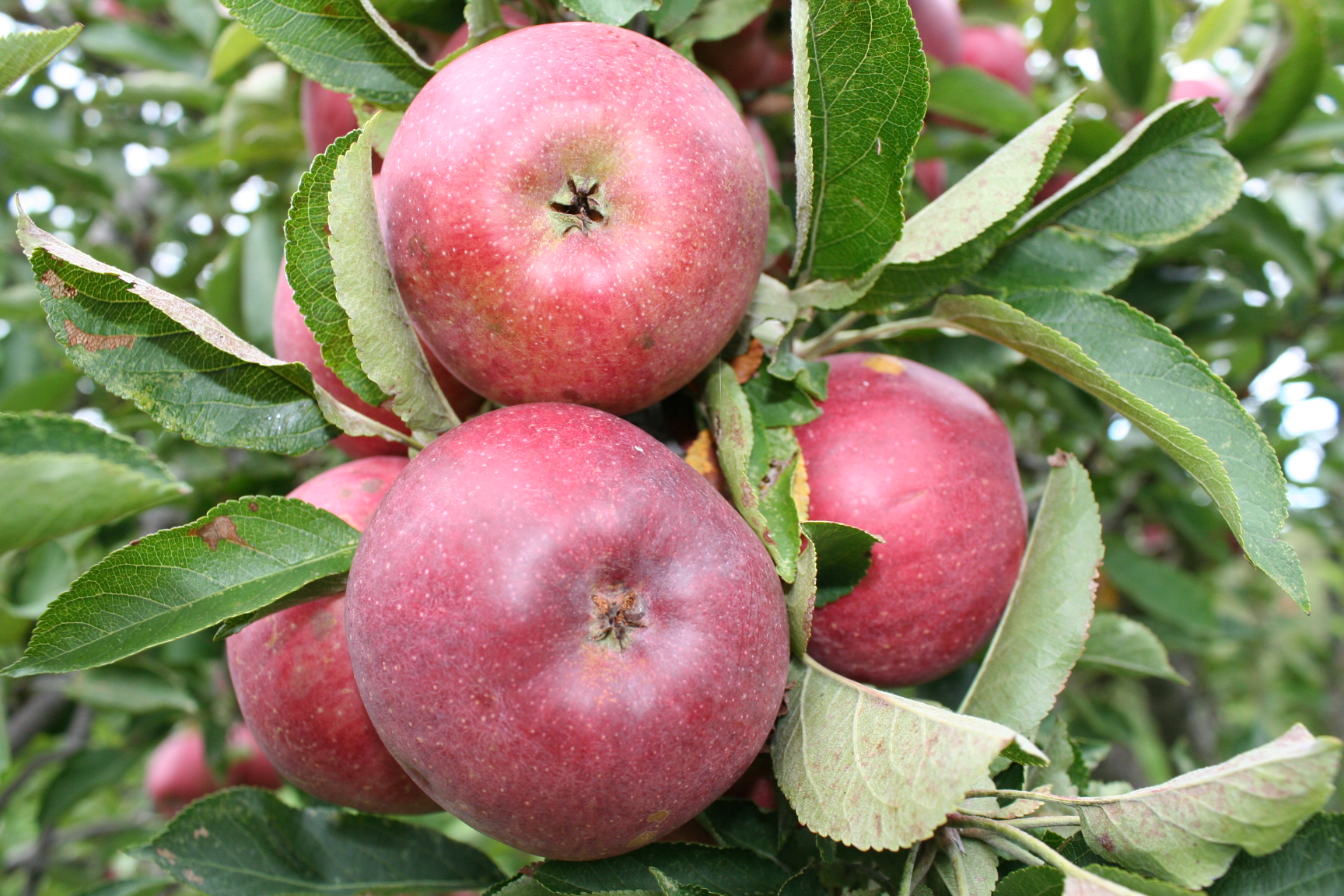
Nestled near the Kansas River just east of Topeka is a fruit farm with roots deeper than the apple trees they grow. The sole survivor of an area that once bustled with fruit and vegetable production, Rees Fruit Farm has more than 100 years of experience under their belt and is still going strong.

“As long as there have been Kansas farms, there have been Kansas orchards,” says Rex Rees who owns and operates the farm with his wife, Shannon. “It has its challenges but you just have to find a way to adapt.”

Their farm consists of roughly 5,000 fruit trees including 19 varieties of apples and 14 varieties of peaches. Cherries, grapes, tomatoes, asparagus, pumpkins, blackberries and a plethora of other fresh produce and goods can be found in the Rees Fruit Farm market.

The establishment is also home to award winning apple cider and the original Sweet Apple Cider Slush, a trademark of Rees Fruit Farm that continues to be a top seller.

How did the farm keep going through the years when other didn’t? Rex says it was a combination of things—including luck. “We’ve always had a retail market” he says. “We have a good location; close to the city but on a side that is less developed. The land isn’t so valuable that we can still afford to farm it.” Another key ingredient to success: satisfied customers. “We’re always trying new things to keep up with trends, and keep people coming back.”

Growing fruits and vegetables in the Midwest is not always easy. Like every farm, they must deal with what they’re dealt and in some years that means turbulent growing conditions. High temperatures, low temperatures, humidity, insects, disease; it’s not the most ideal place to grow—but it works.  “The thing about locally grown produce is that it doesn’t look like what you get at the grocery store, but the taste is so much better,” Rex says. “Our tomatoes may not be identical and flawless, but they taste delicious and that’s what matters most.”

Consumers craving locally grown produce are seeking out fresh fruit stands and farmers markets like never before to have a taste. In 1987 (the first year markets were surveyed) Kansas was home to 26 farmers markets. Today that number has almost tripled to the current census of 80 markets statewide.

Sunday, August 9, 2009

Irrigation Face Off

Center pivot or subsurface drip?


Farmers are professional decision makers. In every aspect of their work they are faced with choices and options to consider, even when it comes to irrigation systems.

Subsurface drip irrigation or SDI, a low-pressure, high efficiency irrigation system that uses buried drip tubes or drip tape to meet crop water needs is one option. SDI technologies have been a part of irrigated agriculture since the 1960s; with the technology advancing rapidly in the last two decades.

But how does an SDI system stack up to the more popular center pivots that roll over many of the irrigated acres in the Midwest?

“SDI systems are generally thought to be at least as efficient in terms of irrigation water use as center pivot irrigation systems, primarily because they avoid the evaporative losses that occur from exposing irrigation water on the soil surface and in the open above ground environment,” said K-State Extension Specialist, Daniel O'Brien.  “At K-State we have used conservative estimates of 10-20% water savings efficiency with SDI compared to center pivot irrigation.  In field situations were irrigation water availability is not limited, these efficiency gains may not be that important.  But where irrigation water supplies are more limited, 10-20% efficiency gains in irrigation water use could be extremely important and beneficial to an agricultural producer.”

It’s the system’s efficiency that attracted producers Jim and Jeff Reinert, a father/son farming duo from Ensign, KS. Their farm includes two separate SDI systems both 60 acres each, one with 30 inch tape the other with 60 inch.

“The thing you ultimately look for is the value of water,” Jim said.  “As water becomes more and more important to us, it’s something we need to do a better job of conserving.  We also want to be more efficient with our water allocations in relation to our acres. If we can maximize the productivity with a drip tape system to better use our water—that adds a value that is extremely important. Everything we can do to conserve water can only work in our benefit. I’ve been irrigating for the better part of 50 years and I hope my son has that same capability.

Sunday, March 8, 2009

Good to the last droplet


Keys to calibrating your sprayer to get more bang for your buck


A miscalibrated sprayer is like a box of chocolates – you never know what you’re going to get. Maybe you’ll get proper coverage or maybe it’ll be lost to drift.

Accurate calibration is the only way to know how much chemical is being applied to your field. Even with the current use of electronics to monitor and control the application of crop protection products, a thorough sprayer calibration procedure is essential to ensure against misapplication. Failure to calibrate a sprayer can injure your crop, cause pollution and worst of all waste money.

“The sprayer itself needs to be operating as efficiently as possible,” says Bob Wolf, K-State extension application technology specialist. “Especially the first time out in the spring, you need to make sure your sprayer is all tuned up. That there are no leaks, the pump works properly, nothing is plugged and every component is functioning properly including electronics.” While that may cover the basics Wolf says there’s more to the calibration process.

“Take into account what kind of coverage the chemical will need and pick the right nozzle type to maximize it’s impact,” Wolf says. “Applicators need to consider what type of activity the chemical has, whether it needs contact area or if it will translocate through the plant, then calibrate for the system to best deliver the proper amount on the target.”

When it comes to selecting nozzles, there’s certainly a plethora of choices these days but no singular silver bullet says application technology research scientist with Syngenta, Dan Kidder. He finds nozzle manufacturer catalogs and the pesticide product labels very helpful in making this decision. “It’s tempting to try to make one set of nozzles work for all products by changing your sprayer pressure and ground speed,” Kidder says. “But with the diversity of products typically used on today’s state-of-the-art farms this strategy will almost always result in less than optimum application of some of the products. Less than optimum coverage requires higher product use rates and may cause unnecessary environmental loading. It pays to invest in several sets of nozzles for your different products. And better yet, install swivel style multiple nozzle bodies on your boom so you can change spray tips with just a flick-of-the-wrist.”

Some nozzles also produce a broader spectrum of droplet sizes, another important aspect of in terms of crop protection application. “Droplet size impacts coverage and droplet size impacts drift,” Wolf says. “Somewhere we have to find the happy medium because the common thought is smaller droplets means better coverage but we come against some things in the environment that prevent that. Smaller droplets will drift easier and some applicators overlook the evaporation concern. Especially in the Kansas and Nebraska areas that can have wind and dry conditions it’s definitely something to keep in mind.”

An adopted standard specifies a droplet size spectrum broken down into six categories; very fine, fine, medium, coarse, very coarse and extra coarse. Product labels are now featuring the recommended droplet size to improve application performance.

“Applicators are getting more and more focused on droplet size because we are learning that certain types of targets require different kinds of coverage and droplet size aspects than others and the sprayer must be set up for it,” Wolf says. “It’s going to require applicators to have a pretty good knowledge on the type of nozzles they are using and relate that to the product recommendation for droplet size.”

But how much difference does size really make? A drop is a drop, right? Not when talking about spray application, where every drop counts. “A change in droplet size has a huge effect on the number of droplets applied per square inch,” Kidder says. “For instance, reducing droplet size by half increases the number of droplets applied per square inch by eight times. Large droplets drift less than small droplets so spray losses are minimized. Large droplets also penetrate crop canopies better to reach the lower leaves; which is important for some fungicide applications. But smaller droplets cover the upper canopy better and are also better at providing some coverage on the underside of leaves.”

Kidder also suggests applicators match droplet size to spray volume. “If you’re lowering spray volume to save time, reduce droplet size to maintain quality. Higher water volumes result in higher operating cost due to more time and energy traveling to and from the refill site and soil compaction is sometimes a consideration when hauling high volumes of water back and forth across the field.”

Spray application is not what it use to be. For good reasons growers seem more focused than ever on reducing costs and optimizing sprays. “Producers pretty much know how to calibrate to get the right orifice size to deliver the right gallons per acre,” Wolf says. “But now there’s more to it, they have this droplet size spectrum concern in there and that may force them to take calibration a step further. The underlying key is to understand the application system and ensure that it is as efficient as possible so that it performs well in the field.”

Wednesday, February 4, 2009

Lean, Mean, No-Tilling Machines

Producers gear up for planting season with proper equipment


You carefully plan your crop rotations, shop for seed varieties, budget wisely for chemicals and analyze the markets. But nothing is more important than getting your no-till crop off to the right start with proper seeding.


no-till-equipment-015Attaining good stands in no-till requires hard working planters and drills that can handle residue without the hassle of plugging, penetrate the soil to the desired seeding depth, establish proper seed-to-soil contact and effectively close the seed-vee.


“Having the right equipment, functioning properly is one of the most important factors in no-till,” says Sterling, KS no-till farmer, Lee Scheufler. “It may seem expensive or tedious—but it’s time and money well invested.”

Scheufler and his wife, Margaret, began no-till farming in 1996 after seeing success with on-farm trials. “We decided to gradually switch from conventional tillage to no-till over several years, but in terms of equipment and mindset it was difficult to do both. By 2002 we were 100% no-till with a capital ‘N’ we do as little to disturb the soil as possible.”

The Scheufler’s do that by keeping it simple, yet being open minded. “As far as equipment—we don’t do anything exotic, it doesn’t have to be fancy to get the job done. We have always been the type to test things for ourselves before completely adopting it.”
Keeping with the idea of “try before you buy” the Scheufler’s also do custom work, making it possible for other producers in the area to try no-till without long term commitment. “It’s really about finding what works best for you,” Scheufler said. “It’s not about what everyone else is doing, or having the biggest or best —but about what fits your farm and operation.”

By evaluating the strengths and weaknesses of any piece of planting equipment and making few (if any) adjustments— many available planters and drills can be no-till worthy,, said University of Nebraska-Lincoln Extension Engineer, Paul Jasa.


With appropriate weight, down pressure and adjustments, most current planters and drills will perform well in no-till conditions, Jasa said. A little time spent in the early spring will help avoid headaches and delays later during the planting season, so consider your equipment needs now.

Saturday, January 24, 2009

Producers gain insight at “Cover Your Acres” conference


"The only person who is educated is the one who has learned how to learn and change." -- Carl Rogers


cover-your-acres-005

Step into any local Midwest coffee shop or small town café some morning and you will likely find a couple farmers in deep conversation; exchanging news and ideas. While the stories and wisdom shared in a scenario like this may not always be completely accurate—it’s one of the most basic forms of producer interaction and education.

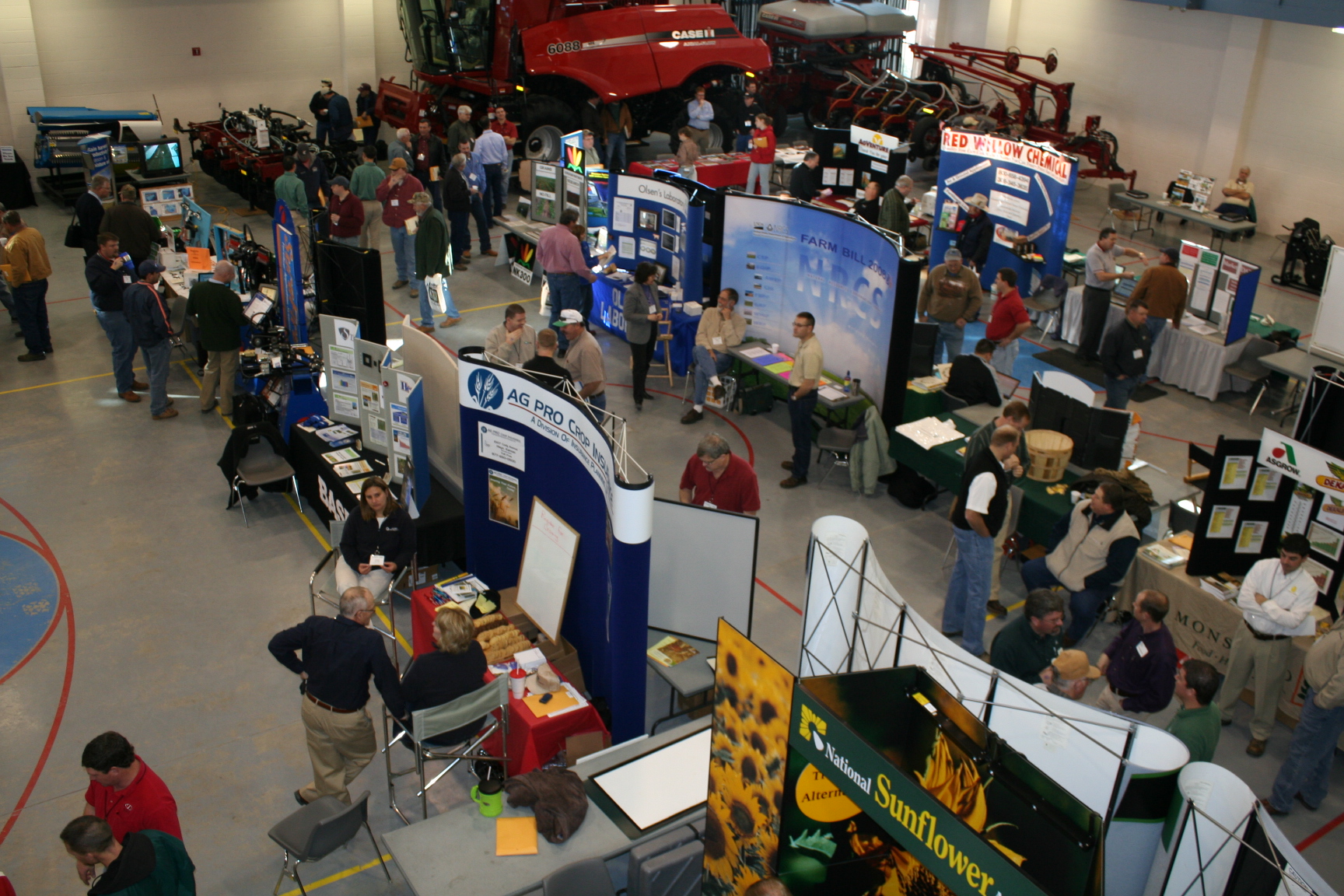
It was the same conversing environment at the 6th annual “Cover Your Acres Winter Conference” January 20-21 in Oberlin, KS, where more than 700 farmers gathered for the two day event of presentations focusing on the latest technology, methods and conservation practices to improve crop production on the High Plains.

“Cover Your Acres” was created in 2003 when the need was recognized for a conference providing comprehensive discussion of conservation crop production practices. The joint educational venture by Kansas State Research and Extension and the Northwest Kansas Crop Residue Alliance, a farmer driven group, began with a simple one-day conference. Since then the event grew, adding industry presentations and a second day with the same program allowing more farmers to attend.

“People come from all over too hear what’s going on and get ideas for new ways to do things on their farm,” said Jeanne Falk with the Northwest Kansas Research and Extension. “We’ve received good feedback each year, and it’s something producers get excited about. We’ve had some farmers that have continued to come back each year since it started.”

Falk said that the conference is about practical advice for productive farming on the High Plains. “It’s called ‘Cover Your Acres’ so naturally it’s a lot of no-till, conservation tillage issues, how to preserve the moisture we have in this location and make it the most profitable. The event also features an industry expo, which lets producers see the newest items available and visit with company representatives”

Some of the hot topics at this year’s conference were wheat residue management, weed strategies in grain sorghum and pros and cons of UAN with herbicides for wheat. Producers could also learn about advances in breeding technology, marketing strategies and even carbon credit trading.

In addition to the presentations two sessions featured panels of farmers who addressed the topics: things to do before you start to no-till and summer crop plant population.

When the conference is over, all attendees are sent a survey that allows them to evaluate the conference, individual presentations, ask them for ways the conference can be improved, and most importantly asks what topics they would like to see next year. The hot topics indicated on the survey lays the groundwork for next year’s conference.

“This year, weed strategies in grain sorghum was an area farms were really interested in and we get interest in the new technologies, some things farmers just want an update on and also other topics like carbon credit trading; something that’s not discussed a lot and yet it’s very applicable out here,” Falk said. “This conference is very producer driven—they help us pick the sessions, we also have the farmer panels, and the Northwest Kansas Crop Residue Alliance involved which is made up of farmers itself. The conference is very base and very applicable to farmers. We also try to choose speakers who are able to explain things and boil it down to what farmers really need and want to know.”

Farmers attending the conference appreciate the focus the conference puts on production. “They put on a good program and discuss issues that really affect us,” said Bob Martin, a Herndon, KS farmer. “I think it’s really important to have conferences like this and for farmers to continue learning because agriculture is continually changing.”

For those behind the scenes making the conference happen, seeing the end project and feedback from grateful producers makes it a rewarding event to be a part of. “It’s exciting to see farmers, extension specialists, university staff and area people come together for something this large,” Falk said. “It’s fun and exciting to hear what your neighbors are doing, what works for them and what doesn’t and to learn more about what’s going on in terms of research in the area. It’s also a great opportunity for people in research and extension to hear the needs and questions of producers. The conference is really a mingling of ideas and the sharing of information among those people who know and understand agriculture on the High Plains the best.”

With another successful year done, the future of the “Cover Your Acres” conference appears to be bright Falk said. “While we do strive to hold steady and even grow our attendance, the real mission for the conference is to keep it applicable for farmers and to make it worthwhile—that’s really what it’s about.”

Sunday, January 4, 2009

2009 Kansas Agriculture Outlook

Let's Play A Game

“You got to know when to hold 'em, know when to fold 'em, know when to walk away and know when to run.” These well known lyrics of Kenny Rogers, The Gambler don’t just apply to a game of cards anymore.

poker-handAs producers look down the road to 2009 a lot of questions come to mind. Hold out for better prices or take the money and run? The stakes are high and the winnings are uncertain.

But every hand’s a winner and every hand’s a loser – it’s all in how you play your cards. Before laying your chips on the table, consider the inside advice of Kansas agriculture leaders.

Kansas Secretary of Agriculture, Adrian Polansky sees 2009 as a year with challenges that will push for sound decision making. “One area we really need to focus on is risk management,” Polansky said. “For production agriculture the volatility that we’ve seen on the input side whether it’s diesel fuel, fertilizer or other inputs; it appears that we are likely to continue to experience volatility. There will certainly be some market dynamics that we will have to pay attention to in order to be successful.”

Polansky also mentions the uncertainty that lies ahead with a new administration on the federal level. “There is certainly interest in some of the critical appointments, we also have much of the Farm Bill yet to be worked through and there are still many unanswered questions in regard to how the Farm Bill will be delivered, which is very significant to all producers.”

In terms of crop agriculture decisions, Polansky says that policy in terms of biofuels could have significant impact on potential profitability. “For agriculture and the rural economy it’s important that we work towards policy decisions to enhance biofuels and bio-refineries that have positive impact.”

Sunday, December 28, 2008

Hereford Family Tradition

Hereford producers find significance in functional cattle


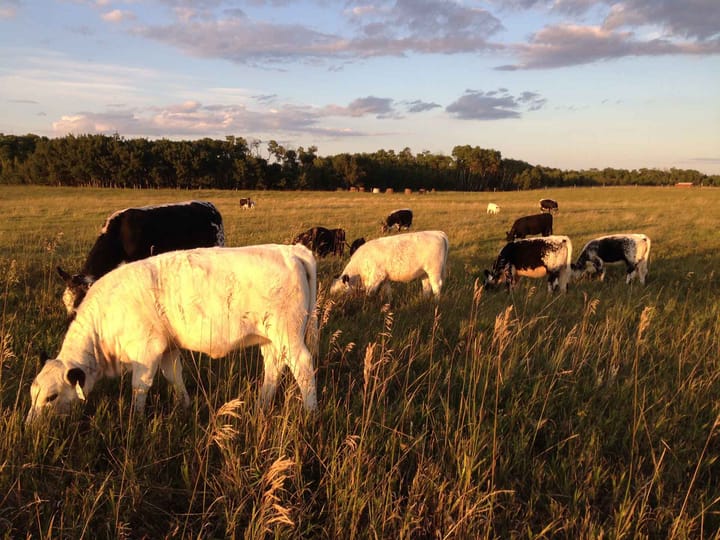
img_4161Peacefully grazing the gently sloping hills near Concordia, KS is what appears to be a typical herd of Hereford cattle. To the common eye they are nothing more than livestock, but to the Swenson family they are a cherished product of careful evaluation and strategy. Although humble in a pasture they are sought to be sound in form, efficiently functional and the result of generations of hard work and passion.

It all began when Emil and Carl Swenson purchased their first Hereford females and established Swenson Brothers Herefords in 1934.  From there, the operation grew and yearly production sales were held until the late 1980’s.  “Back then, we were only selling two year old bulls, but the demand that year had buyers coming back to the farm after the sale to purchase yearlings, and from then on, we sold the bulk of our bulls by private treaty on the ranch,” said Richard Swenson. The family will celebrate 75 years in the Hereford business next year with many more to be continued on by Richard and Denise Swenson and their three sons; Ryan, Kevin and Ben.

The Swenson’s adopted the teachings of Dr. Jan Bonsma, a South African scientist who toured the U.S. and wrote the book “Man Must Measure”. As a researcher, Bonsma is internationally famed for his knowledge of the relationship of cattle to their environment and to each other. The book, which went out of print in 1983, outlines beef animal growth characteristics, environmental impacts and fertility, among other traits Bonsma taught the utilization of linear measurements of cattle to predict maternal function, growth and performance in various seminars and lectures.

“My dad attended a lecture and demonstration at K-State given by Dr. Bonsma, and was very impressed with his knowledge and understanding of function and fertility of cattle and how animals relate to their environment,” Richard Swenson said. “By studying an animal, he could easily visualize its functional efficiency and fertility.”

Wednesday, November 12, 2008

Farm Help Wanted

8 Ways To Hire Good Help


Guidelines for finding and keeping wage-worthy employees for your farm.


“Employers today are struggling to find the right people,” says Gary Maas, president of AGRIcareers, Inc. “It’s hard to find employees who have the skills and competencies for the job, the values and behaviors that promote job satisfaction and the attitudes that motivate them to excel.”

img_0536Maas questions, how can you spend an afternoon with someone and know if you would like to work with him or her for years?

The cost of hiring an unqualified person may far exceed the time requirements of finding out if the person is right for the job. Experts say the risk of hiring a bad worker can be minimized with a sound selection process and deliberate employee management system and by following a few guidelines.

1.) Know what you need. Take time to evaluate the credentials of prospective employees says Melvin Brees, farm management specialist at the University of Missouri.

Understand the job, and you’ll understand the best possible person to fill it. There are skills, licenses, personality traits and abilities that an employee must have to be successful and employers should take no skills for granted.

Create a job description that details the tasks of the position and establishes specifications and requirements needed to do the job. Also, remember that a job description should evolve with the business, position and employee.

The best way to recruit skilled new employees is to make your business the kind of place where talented and hard-working people feel appreciated and valued, Maas says. Being a great employer makes it easier to retain quality people and develop a reputation of being the employer of choice.

Recruitment channels can include government agencies, schools/universities/colleges, want ads, private agencies and through increasingly popular Web sites. Concentrated recruitment efforts are much more effective in the long run than a shotgun approach where efforts are scattered and include random groups of people.

2) Evaluate the applicants. A complex position will require a multi-dimensional evaluation to determine if an applicant has all the necessary skills. Ask questions pertaining to specific farm-related situations and see how the person responds.

“It’s best if an employer can use his own application form to equally compare all candidates while getting information relative to the needs of the position,” Mass says. “Make sure you compare apples-to-apples so that every applicant has the same start.”

Written tests are good to gather general information and are an excellent tool when technical knowledge is required, while oral tests may help assess the applicant’s communication ability and technical expertise. Individual interviews allow potential employers and employees to get to know each other. However, some applicants may sound very impressive during an interview and disappoint once on the job, or be nervous in an interview and miss their opportunity to shine.

A practical test is useful because it requires the applicant to perform one or more of the skills the job requires, Maas says. These tests also demonstrate the applicants’ thought process—did they ask questions, prioritize tasks and keep their composure if something went wrong?

Require the applicant to provide the names and phone numbers of past employers. While keeping in mind people have different perceptions and personalities, Maas recommends looking for patterns with previous employers.

If the new employee will be working with current employees or family members, include them in the evaluation process. Also, remember that evaluation goes both ways, you may not get a great employee if you don’t put your best foot forward, too.

3) Be the boss you would want to work for. Ask yourself the question, “Would you like working for you?” No one ever said that employee management would be easy, but it doesn’t have to be difficult.

Employee surveys have shown that the most important thing to employees is working for someone they trust and having a boss that looks out for them,” Maas says.


Sunday, October 26, 2008

Kansas Swine Research Facilities


New swine facility will expand research capabilities at K-State and benefit producers

The Kansas swine industry is a vigorous business with producers marketing approximately 2.5 million pigs at a gross market value of over $3 million. Being the 9th top pork producing state and turning out 2.8% of the nation’s total production is no easy task; in fact it’s a team effort.

Leading the way through research, the K-State Swine Team works with producers and industry leaders to develop, evaluate, implement and disseminate the latest technology to increase the profitability of Kansas pork producers. Based out of K-State’s Department of Animal Sciences and Industry and armed with the support of the Kansas Pork Association, the KSU Livestock and Meal Industry Council, direct swine producers and allied industry donations; the Swine Team aims simply to educate producers.

“It’s a fairly applied program,” says Extension specialist, Bob Goodband. “We do a lot of research that we feel producers will find helpful and benefit from. We have the opportunity and ability to progress the industry, and that is something that we try very hard to do.”

To provide the best research requires the best facilities. The researching center is in the process of making an addition with a wean-to-finish facility. Extension specialist, Joel DeRouchey says the building will have the capability of weaning directly into this facility for research purposes. “This new building replaces an existing facility that was built in 1968, and also expands the number of pigs that can be housed indoors,” DeRouchey says. “Currently, dirt lots house pigs not used for research due to space limitations of the previous barn and those pigs for teaching purposes. This increase in barn size will allow for the removal of all outdoor lots, improving the environmental aspects of the farm by eliminating the need to contain rain runoff of the outdoor pens and reduce odor coming off of the dirt lots.” DeRouchey adds that the outdoor lots will be converted into crop ground with adjoining land currently in production.

DeRouchey says two of the four rooms will be identical in size and design, with 40 pens each capable of housing up to eight pigs per pen (320 total per room). “These research rooms will be fed with a state of the art computerized feeding system, FeedLogic, which delivers feed on a rail system and has capabilities of blending diets together as feeders are filled. This offers more flexibility in research design for nutritional trials.”

The other two rooms which are also identical in design, will have 22 pens capable of housing eight pigs per pen. “One of these rooms will house pigs for exploratory and pilot study research,” DeRouchey says. “The other room will house pigs that will be used for education and evaluation in the numerous undergraduate classes that utilize swine here on campus in our Weber Hall Arena. This room will also serve as the primary marketing room for additional pigs of various weights from the remainder of the university swine farm.”

DeRouchey also notes that the building itself will have the latest technologies of equipment, ventilation and feeding systems. The facility will also be utilized for educational training to graduate and undergraduate students to help prepare them for similar management techniques used in commercial operations.

Located at the edge of the K-State campus, the present Swine Teaching and Research Center has about 160 sows in production, which are of commercial line genetics. All females are bred by artificial insemination to terminal line boars. Sows are farrowed every 35 days and offspring are weaned into one of two nursery facilities. After seven weeks in the nursery facilities, pigs are moved to a growing facility or to one of three finishing buildings and utilized in research.

Goodband says current swine research is being done is promising for producers. “Right now our research includes looking at different types of feeders and feeder adjustments to see how it impacts performance,” he says. “We’re also doing some research on creep feeding to provid extra feed for piglets. A large focus is looking at DDGS feeding, with corn prices as high as they are, distillers are an economical alternative. Along with that we’ve been doing research on adding enzymes to feed to aid with digestability. When feeding distillers, there is a lot more fiber content so potentially by adding enzymes the fiber can be broke down a little better.” Goodband also mentions that researchers are always evaluating new protein sources for piglets and overall nutritional recommendations.

While construction crews are still bustling around the site of the soon to be building, the excitement is growing among Swine Team researchers who are eager put it to work. “One of our main focuses in the barns will be nutrition research to help producers best use ethanol co-products and other alternative ingredients in their swine diets without compromising pig performance or meat quality,” says Extension specialist Mike Tokach. “We are excited that the building will help us conduct research vital to helping Kansas producers deal with difficult production decisions.”

The hard work and research of the Swine Team doesn’t go unnoticed by the pork producers of Kansas. “The main jist of K-State research is to help producers lower the cost of production. About 60% of production cost is feed inputs, as grain prices have risen that percentage has went up considerably. What K-State does for producers is a very valuable resource,” says Kansas Pork Association President, Tim Stroda. “Much of the research that goes on through the K-State Swine Team heads towards the area of nutrition. Their research is very important to producers especially in times of high grain prices like now. Producers appreciate their ability and effort to help them make money. Our hope is that by supporting the facility enhancement project that producers will have that expertise at their fingertips for the next decades to come.”