Showing posts with label agriculture news. Show all posts

Saturday, January 24, 2009

Producers gain insight at “Cover Your Acres” conference


"The only person who is educated is the one who has learned how to learn and change." -- Carl Rogers

cover-your-acres-005

Step into any local Midwest coffee shop or small town cafĂ© some morning and you will likely find a couple farmers in deep conversation; exchanging news and ideas. While the stories and wisdom shared in a scenario like this may not always be completely accurate—it’s one of the most basic forms of producer interaction and education.

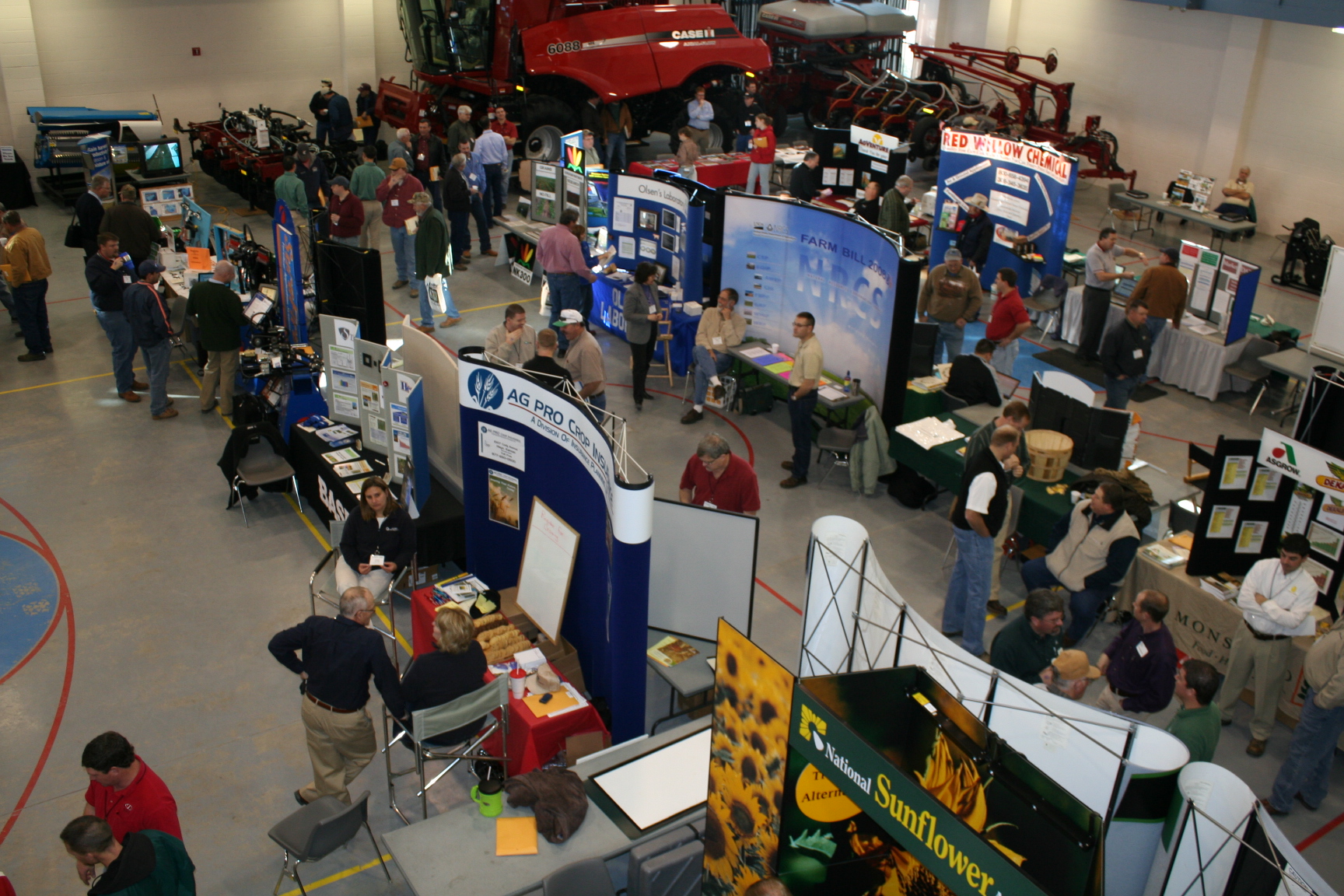
It was the same conversing environment at the 6th annual “Cover Your Acres Winter Conference” January 20-21 in Oberlin, KS, where more than 700 farmers gathered for the two day event of presentations focusing on the latest technology, methods and conservation practices to improve crop production on the High Plains.

“Cover Your Acres” was created in 2003 when the need was recognized for a conference providing comprehensive discussion of conservation crop production practices. The joint educational venture by Kansas State Research and Extension and the Northwest Kansas Crop Residue Alliance, a farmer driven group, began with a simple one-day conference. Since then the event grew, adding industry presentations and a second day with the same program allowing more farmers to attend.

“People come from all over too hear what’s going on and get ideas for new ways to do things on their farm,” said Jeanne Falk with the Northwest Kansas Research and Extension. “We’ve received good feedback each year, and it’s something producers get excited about. We’ve had some farmers that have continued to come back each year since it started.”

Falk said that the conference is about practical advice for productive farming on the High Plains. “It’s called ‘Cover Your Acres’ so naturally it’s a lot of no-till, conservation tillage issues, how to preserve the moisture we have in this location and make it the most profitable. The event also features an industry expo, which lets producers see the newest items available and visit with company representatives”

Some of the hot topics at this year’s conference were wheat residue management, weed strategies in grain sorghum and pros and cons of UAN with herbicides for wheat. Producers could also learn about advances in breeding technology, marketing strategies and even carbon credit trading.

In addition to the presentations two sessions featured panels of farmers who addressed the topics: things to do before you start to no-till and summer crop plant population.

When the conference is over, all attendees are sent a survey that allows them to evaluate the conference, individual presentations, ask them for ways the conference can be improved, and most importantly asks what topics they would like to see next year. The hot topics indicated on the survey lays the groundwork for next year’s conference.

“This year, weed strategies in grain sorghum was an area farms were really interested in and we get interest in the new technologies, some things farmers just want an update on and also other topics like carbon credit trading; something that’s not discussed a lot and yet it’s very applicable out here,” Falk said. “This conference is very producer driven—they help us pick the sessions, we also have the farmer panels, and the Northwest Kansas Crop Residue Alliance involved which is made up of farmers itself. The conference is very base and very applicable to farmers. We also try to choose speakers who are able to explain things and boil it down to what farmers really need and want to know.”

Farmers attending the conference appreciate the focus the conference puts on production. “They put on a good program and discuss issues that really affect us,” said Bob Martin, a Herndon, KS farmer. “I think it’s really important to have conferences like this and for farmers to continue learning because agriculture is continually changing.”

For those behind the scenes making the conference happen, seeing the end project and feedback from grateful producers makes it a rewarding event to be a part of. “It’s exciting to see farmers, extension specialists, university staff and area people come together for something this large,” Falk said. “It’s fun and exciting to hear what your neighbors are doing, what works for them and what doesn’t and to learn more about what’s going on in terms of research in the area. It’s also a great opportunity for people in research and extension to hear the needs and questions of producers. The conference is really a mingling of ideas and the sharing of information among those people who know and understand agriculture on the High Plains the best.”

With another successful year done, the future of the “Cover Your Acres” conference appears to be bright Falk said. “While we do strive to hold steady and even grow our attendance, the real mission for the conference is to keep it applicable for farmers and to make it worthwhile—that’s really what it’s about.”


Sunday, January 4, 2009

2009 Kansas Agriculture Outlook

Let's Play A Game

“You got to know when to hold 'em, know when to fold 'em, know when to walk away and know when to run.” These well known lyrics of Kenny Rogers, The Gambler don’t just apply to a game of cards anymore.

poker-handAs producers look down the road to 2009 a lot of questions come to mind. Hold out for better prices or take the money and run? The stakes are high and the winnings are uncertain.

But every hand’s a winner and every hand’s a loser – it’s all in how you play your cards. Before laying your chips on the table, consider the inside advice of Kansas agriculture leaders.

Kansas Secretary of Agriculture, Adrian Polansky sees 2009 as a year with challenges that will push for sound decision making. “One area we really need to focus on is risk management,” Polansky said. “For production agriculture the volatility that we’ve seen on the input side whether it’s diesel fuel, fertilizer or other inputs; it appears that we are likely to continue to experience volatility. There will certainly be some market dynamics that we will have to pay attention to in order to be successful.”

Polansky also mentions the uncertainty that lies ahead with a new administration on the federal level. “There is certainly interest in some of the critical appointments, we also have much of the Farm Bill yet to be worked through and there are still many unanswered questions in regard to how the Farm Bill will be delivered, which is very significant to all producers.”

In terms of crop agriculture decisions, Polansky says that policy in terms of biofuels could have significant impact on potential profitability. “For agriculture and the rural economy it’s important that we work towards policy decisions to enhance biofuels and bio-refineries that have positive impact.”

Sunday, December 28, 2008

Hereford Family Tradition

Hereford producers find significance in functional cattle


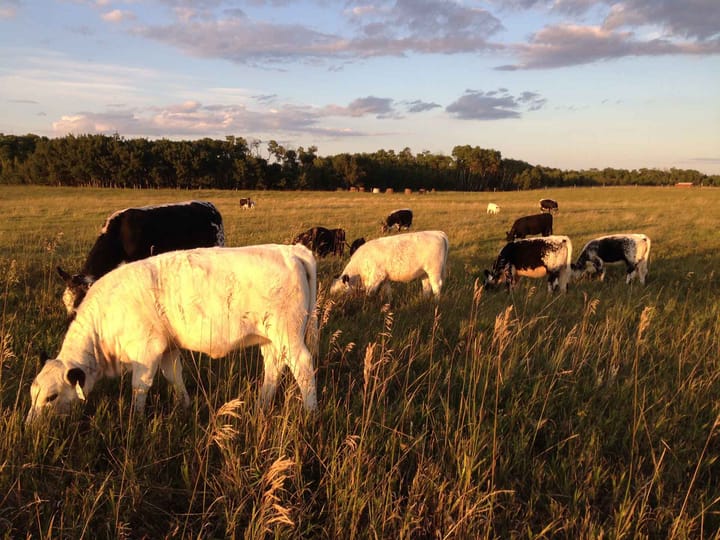
img_4161Peacefully grazing the gently sloping hills near Concordia, KS is what appears to be a typical herd of Hereford cattle. To the common eye they are nothing more than livestock, but to the Swenson family they are a cherished product of careful evaluation and strategy. Although humble in a pasture they are sought to be sound in form, efficiently functional and the result of generations of hard work and passion.

It all began when Emil and Carl Swenson purchased their first Hereford females and established Swenson Brothers Herefords in 1934.  From there, the operation grew and yearly production sales were held until the late 1980’s.  “Back then, we were only selling two year old bulls, but the demand that year had buyers coming back to the farm after the sale to purchase yearlings, and from then on, we sold the bulk of our bulls by private treaty on the ranch,” said Richard Swenson. The family will celebrate 75 years in the Hereford business next year with many more to be continued on by Richard and Denise Swenson and their three sons; Ryan, Kevin and Ben.

The Swenson’s adopted the teachings of Dr. Jan Bonsma, a South African scientist who toured the U.S. and wrote the book “Man Must Measure”. As a researcher, Bonsma is internationally famed for his knowledge of the relationship of cattle to their environment and to each other. The book, which went out of print in 1983, outlines beef animal growth characteristics, environmental impacts and fertility, among other traits Bonsma taught the utilization of linear measurements of cattle to predict maternal function, growth and performance in various seminars and lectures.

“My dad attended a lecture and demonstration at K-State given by Dr. Bonsma, and was very impressed with his knowledge and understanding of function and fertility of cattle and how animals relate to their environment,” Richard Swenson said. “By studying an animal, he could easily visualize its functional efficiency and fertility.”

Wednesday, November 12, 2008

Farm Help Wanted

8 Ways To Hire Good Help


Guidelines for finding and keeping wage-worthy employees for your farm.


“Employers today are struggling to find the right people,” says Gary Maas, president of AGRIcareers, Inc. “It’s hard to find employees who have the skills and competencies for the job, the values and behaviors that promote job satisfaction and the attitudes that motivate them to excel.”

img_0536Maas questions, how can you spend an afternoon with someone and know if you would like to work with him or her for years?

The cost of hiring an unqualified person may far exceed the time requirements of finding out if the person is right for the job. Experts say the risk of hiring a bad worker can be minimized with a sound selection process and deliberate employee management system and by following a few guidelines.

1.) Know what you need. Take time to evaluate the credentials of prospective employees says Melvin Brees, farm management specialist at the University of Missouri.

Understand the job, and you’ll understand the best possible person to fill it. There are skills, licenses, personality traits and abilities that an employee must have to be successful and employers should take no skills for granted.

Create a job description that details the tasks of the position and establishes specifications and requirements needed to do the job. Also, remember that a job description should evolve with the business, position and employee.

The best way to recruit skilled new employees is to make your business the kind of place where talented and hard-working people feel appreciated and valued, Maas says. Being a great employer makes it easier to retain quality people and develop a reputation of being the employer of choice.

Recruitment channels can include government agencies, schools/universities/colleges, want ads, private agencies and through increasingly popular Web sites. Concentrated recruitment efforts are much more effective in the long run than a shotgun approach where efforts are scattered and include random groups of people.

2) Evaluate the applicants. A complex position will require a multi-dimensional evaluation to determine if an applicant has all the necessary skills. Ask questions pertaining to specific farm-related situations and see how the person responds.

“It’s best if an employer can use his own application form to equally compare all candidates while getting information relative to the needs of the position,” Mass says. “Make sure you compare apples-to-apples so that every applicant has the same start.”

Written tests are good to gather general information and are an excellent tool when technical knowledge is required, while oral tests may help assess the applicant’s communication ability and technical expertise. Individual interviews allow potential employers and employees to get to know each other. However, some applicants may sound very impressive during an interview and disappoint once on the job, or be nervous in an interview and miss their opportunity to shine.

A practical test is useful because it requires the applicant to perform one or more of the skills the job requires, Maas says. These tests also demonstrate the applicants’ thought process—did they ask questions, prioritize tasks and keep their composure if something went wrong?

Require the applicant to provide the names and phone numbers of past employers. While keeping in mind people have different perceptions and personalities, Maas recommends looking for patterns with previous employers.

If the new employee will be working with current employees or family members, include them in the evaluation process. Also, remember that evaluation goes both ways, you may not get a great employee if you don’t put your best foot forward, too.

3) Be the boss you would want to work for. Ask yourself the question, “Would you like working for you?” No one ever said that employee management would be easy, but it doesn’t have to be difficult.

Employee surveys have shown that the most important thing to employees is working for someone they trust and having a boss that looks out for them,” Maas says.


Sunday, October 26, 2008

Kansas Swine Research Facilities


New swine facility will expand research capabilities at K-State and benefit producers

The Kansas swine industry is a vigorous business with producers marketing approximately 2.5 million pigs at a gross market value of over $3 million. Being the 9th top pork producing state and turning out 2.8% of the nation’s total production is no easy task; in fact it’s a team effort.

Leading the way through research, the K-State Swine Team works with producers and industry leaders to develop, evaluate, implement and disseminate the latest technology to increase the profitability of Kansas pork producers. Based out of K-State’s Department of Animal Sciences and Industry and armed with the support of the Kansas Pork Association, the KSU Livestock and Meal Industry Council, direct swine producers and allied industry donations; the Swine Team aims simply to educate producers.

“It’s a fairly applied program,” says Extension specialist, Bob Goodband. “We do a lot of research that we feel producers will find helpful and benefit from. We have the opportunity and ability to progress the industry, and that is something that we try very hard to do.”

To provide the best research requires the best facilities. The researching center is in the process of making an addition with a wean-to-finish facility. Extension specialist, Joel DeRouchey says the building will have the capability of weaning directly into this facility for research purposes. “This new building replaces an existing facility that was built in 1968, and also expands the number of pigs that can be housed indoors,” DeRouchey says. “Currently, dirt lots house pigs not used for research due to space limitations of the previous barn and those pigs for teaching purposes. This increase in barn size will allow for the removal of all outdoor lots, improving the environmental aspects of the farm by eliminating the need to contain rain runoff of the outdoor pens and reduce odor coming off of the dirt lots.” DeRouchey adds that the outdoor lots will be converted into crop ground with adjoining land currently in production.

DeRouchey says two of the four rooms will be identical in size and design, with 40 pens each capable of housing up to eight pigs per pen (320 total per room). “These research rooms will be fed with a state of the art computerized feeding system, FeedLogic, which delivers feed on a rail system and has capabilities of blending diets together as feeders are filled. This offers more flexibility in research design for nutritional trials.”

The other two rooms which are also identical in design, will have 22 pens capable of housing eight pigs per pen. “One of these rooms will house pigs for exploratory and pilot study research,” DeRouchey says. “The other room will house pigs that will be used for education and evaluation in the numerous undergraduate classes that utilize swine here on campus in our Weber Hall Arena. This room will also serve as the primary marketing room for additional pigs of various weights from the remainder of the university swine farm.”

DeRouchey also notes that the building itself will have the latest technologies of equipment, ventilation and feeding systems. The facility will also be utilized for educational training to graduate and undergraduate students to help prepare them for similar management techniques used in commercial operations.

Located at the edge of the K-State campus, the present Swine Teaching and Research Center has about 160 sows in production, which are of commercial line genetics. All females are bred by artificial insemination to terminal line boars. Sows are farrowed every 35 days and offspring are weaned into one of two nursery facilities. After seven weeks in the nursery facilities, pigs are moved to a growing facility or to one of three finishing buildings and utilized in research.

Goodband says current swine research is being done is promising for producers. “Right now our research includes looking at different types of feeders and feeder adjustments to see how it impacts performance,” he says. “We’re also doing some research on creep feeding to provid extra feed for piglets. A large focus is looking at DDGS feeding, with corn prices as high as they are, distillers are an economical alternative. Along with that we’ve been doing research on adding enzymes to feed to aid with digestability. When feeding distillers, there is a lot more fiber content so potentially by adding enzymes the fiber can be broke down a little better.” Goodband also mentions that researchers are always evaluating new protein sources for piglets and overall nutritional recommendations.

While construction crews are still bustling around the site of the soon to be building, the excitement is growing among Swine Team researchers who are eager put it to work. “One of our main focuses in the barns will be nutrition research to help producers best use ethanol co-products and other alternative ingredients in their swine diets without compromising pig performance or meat quality,” says Extension specialist Mike Tokach. “We are excited that the building will help us conduct research vital to helping Kansas producers deal with difficult production decisions.”

The hard work and research of the Swine Team doesn’t go unnoticed by the pork producers of Kansas. “The main jist of K-State research is to help producers lower the cost of production. About 60% of production cost is feed inputs, as grain prices have risen that percentage has went up considerably. What K-State does for producers is a very valuable resource,” says Kansas Pork Association President, Tim Stroda. “Much of the research that goes on through the K-State Swine Team heads towards the area of nutrition. Their research is very important to producers especially in times of high grain prices like now. Producers appreciate their ability and effort to help them make money. Our hope is that by supporting the facility enhancement project that producers will have that expertise at their fingertips for the next decades to come.”


Saturday, September 13, 2008

Ag Career Resources

Let the hunt begin!


My quest to find a big kid job in "the real world" following my May 2009 graduation is officially underway. As I rummage through the internet looking for potential job opportunities I have come across a heap of Web sites that our devoted solely to ag job placement. I've compiled the list below in hopes that it can assist fellow job seekers.

The latest and dare I say greatest resource is www.agjobnetwork.com.

This site is "An interconnected energetic community of people that support each other by informing us about employment opportunities - and making recommendations about great trends in the agricultural workforce."

Here you can join the community, create a profile, see a wide variety of agriculture jobs and even communicate with professionals and other job seekers! This site is continuously expanding and bursts with opportunities. Check it out!

Other useful site:


Happy Job Hunting To All!

Monday, September 8, 2008

Diesel Saving Advice

Secrets To Saving Fuel


Michigan State University Extension Experts say that a little effort can save a lot of fuel for tractor operators.

In a recent release MSU extension agriculture educators share tips and advice farmers can follow to get more out of the liquid gold-- diesel fuel. Here's what they had to say:

“One estimate that I’ve seen is that U.S. farmers could potentially save up to 150 million gallons of fuel each year,” says Mike Staton, MSU Extension agriculture and natural resources educator based in Van Buren County. “The strategies we suggest aren’t expensive, but do take a little time – like making sure the tractor is set up properly.”

This set-up involves making sure the tractor is carrying the proper amount of weight or ballast on each axle. Carrying either too much or too little weight wastes fuel.

Once the weight is adjusted, Staton recommends checking the inflation pressure in the tractor’s tires and making sure they are inflated properly for the weight of the axle. Weigh each tractor axle at an elevator or other location to ensure maximum accuracy.

“It’s also important to operate the tractor properly,” Staton says. “One tractor may be used for multiple tasks. On some of those tasks, the tractor will have more horsepower than the job needs, so make sure you’re gearing up and throttling down to find the optimum gear.”

Shifting to a higher gear while reducing the throttle setting can improve a tractor’s fuel use and enable it to get the most work done for the least amount of fuel consumed. When working at anything less than 70% of the tractor’s maximum load capacity, this can be a valuable practice for reducing fuel consumption.

Thursday, August 21, 2008

Mad Cow #14

Fresh "Mad Cow" Case In Canada

It's time once again for that same song and dance... this time it's Mad Cow #14. Mad cow disease has struck Canada, with the country's food authorities reporting yet another case on Friday.

The Canadian Food Inspection Agency said that a six-year-old cow was found to be afflicted with the disease, also known as bovine spongiform encephalopathy (BSE) on a farm in Alberta province.

It assured the Canadians that no meat from the animal has entered the food chain or the animal feed system. This is the 14th case of mad cow disease in Canada which has been declared "safe'' by the World Health Organization after the last case two years ago.

The food agency said it is tracking other animals of the herd which came in contact the diseased cow to know whether they have been infected. Since the disease is caused by the consumption of feed which contains traces of brains and spines of infected animals, the agency is also tracing the source of the feed.

Though Canada banned the use of brains and spines in animal feed in 1997 after BSE outbreak in Europe, the new case is a bad news for the economy and for nearby cattle markets.