Showing posts with label News. Show all posts

Saturday, January 24, 2009

Producers gain insight at “Cover Your Acres” conference


"The only person who is educated is the one who has learned how to learn and change." -- Carl Rogers

cover-your-acres-005

Step into any local Midwest coffee shop or small town cafĂ© some morning and you will likely find a couple farmers in deep conversation; exchanging news and ideas. While the stories and wisdom shared in a scenario like this may not always be completely accurate—it’s one of the most basic forms of producer interaction and education.

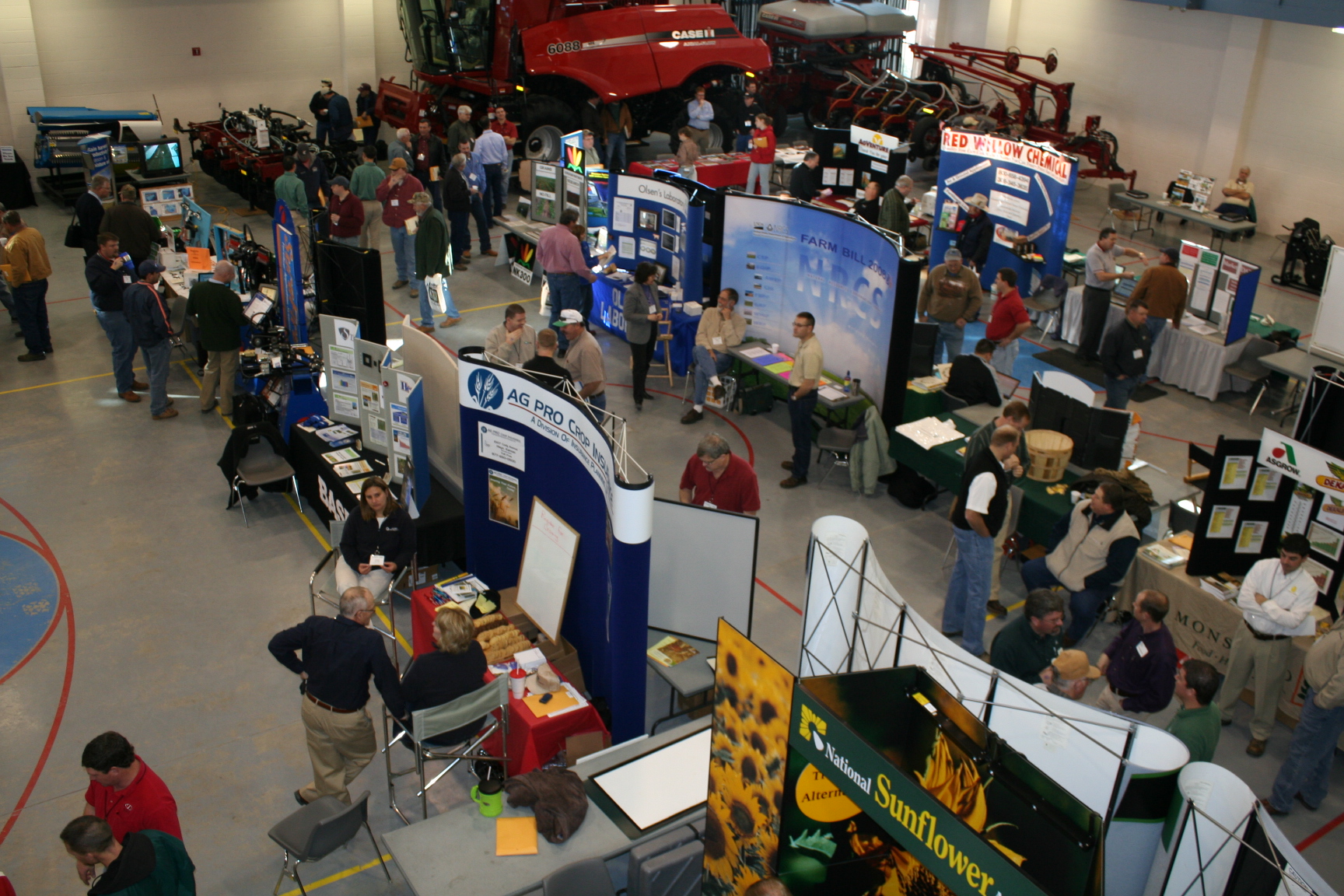
It was the same conversing environment at the 6th annual “Cover Your Acres Winter Conference” January 20-21 in Oberlin, KS, where more than 700 farmers gathered for the two day event of presentations focusing on the latest technology, methods and conservation practices to improve crop production on the High Plains.

“Cover Your Acres” was created in 2003 when the need was recognized for a conference providing comprehensive discussion of conservation crop production practices. The joint educational venture by Kansas State Research and Extension and the Northwest Kansas Crop Residue Alliance, a farmer driven group, began with a simple one-day conference. Since then the event grew, adding industry presentations and a second day with the same program allowing more farmers to attend.

“People come from all over too hear what’s going on and get ideas for new ways to do things on their farm,” said Jeanne Falk with the Northwest Kansas Research and Extension. “We’ve received good feedback each year, and it’s something producers get excited about. We’ve had some farmers that have continued to come back each year since it started.”

Falk said that the conference is about practical advice for productive farming on the High Plains. “It’s called ‘Cover Your Acres’ so naturally it’s a lot of no-till, conservation tillage issues, how to preserve the moisture we have in this location and make it the most profitable. The event also features an industry expo, which lets producers see the newest items available and visit with company representatives”

Some of the hot topics at this year’s conference were wheat residue management, weed strategies in grain sorghum and pros and cons of UAN with herbicides for wheat. Producers could also learn about advances in breeding technology, marketing strategies and even carbon credit trading.

In addition to the presentations two sessions featured panels of farmers who addressed the topics: things to do before you start to no-till and summer crop plant population.

When the conference is over, all attendees are sent a survey that allows them to evaluate the conference, individual presentations, ask them for ways the conference can be improved, and most importantly asks what topics they would like to see next year. The hot topics indicated on the survey lays the groundwork for next year’s conference.

“This year, weed strategies in grain sorghum was an area farms were really interested in and we get interest in the new technologies, some things farmers just want an update on and also other topics like carbon credit trading; something that’s not discussed a lot and yet it’s very applicable out here,” Falk said. “This conference is very producer driven—they help us pick the sessions, we also have the farmer panels, and the Northwest Kansas Crop Residue Alliance involved which is made up of farmers itself. The conference is very base and very applicable to farmers. We also try to choose speakers who are able to explain things and boil it down to what farmers really need and want to know.”

Farmers attending the conference appreciate the focus the conference puts on production. “They put on a good program and discuss issues that really affect us,” said Bob Martin, a Herndon, KS farmer. “I think it’s really important to have conferences like this and for farmers to continue learning because agriculture is continually changing.”

For those behind the scenes making the conference happen, seeing the end project and feedback from grateful producers makes it a rewarding event to be a part of. “It’s exciting to see farmers, extension specialists, university staff and area people come together for something this large,” Falk said. “It’s fun and exciting to hear what your neighbors are doing, what works for them and what doesn’t and to learn more about what’s going on in terms of research in the area. It’s also a great opportunity for people in research and extension to hear the needs and questions of producers. The conference is really a mingling of ideas and the sharing of information among those people who know and understand agriculture on the High Plains the best.”

With another successful year done, the future of the “Cover Your Acres” conference appears to be bright Falk said. “While we do strive to hold steady and even grow our attendance, the real mission for the conference is to keep it applicable for farmers and to make it worthwhile—that’s really what it’s about.”

Wednesday, November 12, 2008

Farm Help Wanted

8 Ways To Hire Good Help


Guidelines for finding and keeping wage-worthy employees for your farm.


“Employers today are struggling to find the right people,” says Gary Maas, president of AGRIcareers, Inc. “It’s hard to find employees who have the skills and competencies for the job, the values and behaviors that promote job satisfaction and the attitudes that motivate them to excel.”

img_0536Maas questions, how can you spend an afternoon with someone and know if you would like to work with him or her for years?

The cost of hiring an unqualified person may far exceed the time requirements of finding out if the person is right for the job. Experts say the risk of hiring a bad worker can be minimized with a sound selection process and deliberate employee management system and by following a few guidelines.

1.) Know what you need. Take time to evaluate the credentials of prospective employees says Melvin Brees, farm management specialist at the University of Missouri.

Understand the job, and you’ll understand the best possible person to fill it. There are skills, licenses, personality traits and abilities that an employee must have to be successful and employers should take no skills for granted.

Create a job description that details the tasks of the position and establishes specifications and requirements needed to do the job. Also, remember that a job description should evolve with the business, position and employee.

The best way to recruit skilled new employees is to make your business the kind of place where talented and hard-working people feel appreciated and valued, Maas says. Being a great employer makes it easier to retain quality people and develop a reputation of being the employer of choice.

Recruitment channels can include government agencies, schools/universities/colleges, want ads, private agencies and through increasingly popular Web sites. Concentrated recruitment efforts are much more effective in the long run than a shotgun approach where efforts are scattered and include random groups of people.

2) Evaluate the applicants. A complex position will require a multi-dimensional evaluation to determine if an applicant has all the necessary skills. Ask questions pertaining to specific farm-related situations and see how the person responds.

“It’s best if an employer can use his own application form to equally compare all candidates while getting information relative to the needs of the position,” Mass says. “Make sure you compare apples-to-apples so that every applicant has the same start.”

Written tests are good to gather general information and are an excellent tool when technical knowledge is required, while oral tests may help assess the applicant’s communication ability and technical expertise. Individual interviews allow potential employers and employees to get to know each other. However, some applicants may sound very impressive during an interview and disappoint once on the job, or be nervous in an interview and miss their opportunity to shine.

A practical test is useful because it requires the applicant to perform one or more of the skills the job requires, Maas says. These tests also demonstrate the applicants’ thought process—did they ask questions, prioritize tasks and keep their composure if something went wrong?

Require the applicant to provide the names and phone numbers of past employers. While keeping in mind people have different perceptions and personalities, Maas recommends looking for patterns with previous employers.

If the new employee will be working with current employees or family members, include them in the evaluation process. Also, remember that evaluation goes both ways, you may not get a great employee if you don’t put your best foot forward, too.

3) Be the boss you would want to work for. Ask yourself the question, “Would you like working for you?” No one ever said that employee management would be easy, but it doesn’t have to be difficult.

Employee surveys have shown that the most important thing to employees is working for someone they trust and having a boss that looks out for them,” Maas says.


Sunday, October 26, 2008

Kansas Swine Research Facilities


New swine facility will expand research capabilities at K-State and benefit producers

The Kansas swine industry is a vigorous business with producers marketing approximately 2.5 million pigs at a gross market value of over $3 million. Being the 9th top pork producing state and turning out 2.8% of the nation’s total production is no easy task; in fact it’s a team effort.

Leading the way through research, the K-State Swine Team works with producers and industry leaders to develop, evaluate, implement and disseminate the latest technology to increase the profitability of Kansas pork producers. Based out of K-State’s Department of Animal Sciences and Industry and armed with the support of the Kansas Pork Association, the KSU Livestock and Meal Industry Council, direct swine producers and allied industry donations; the Swine Team aims simply to educate producers.

“It’s a fairly applied program,” says Extension specialist, Bob Goodband. “We do a lot of research that we feel producers will find helpful and benefit from. We have the opportunity and ability to progress the industry, and that is something that we try very hard to do.”

To provide the best research requires the best facilities. The researching center is in the process of making an addition with a wean-to-finish facility. Extension specialist, Joel DeRouchey says the building will have the capability of weaning directly into this facility for research purposes. “This new building replaces an existing facility that was built in 1968, and also expands the number of pigs that can be housed indoors,” DeRouchey says. “Currently, dirt lots house pigs not used for research due to space limitations of the previous barn and those pigs for teaching purposes. This increase in barn size will allow for the removal of all outdoor lots, improving the environmental aspects of the farm by eliminating the need to contain rain runoff of the outdoor pens and reduce odor coming off of the dirt lots.” DeRouchey adds that the outdoor lots will be converted into crop ground with adjoining land currently in production.

DeRouchey says two of the four rooms will be identical in size and design, with 40 pens each capable of housing up to eight pigs per pen (320 total per room). “These research rooms will be fed with a state of the art computerized feeding system, FeedLogic, which delivers feed on a rail system and has capabilities of blending diets together as feeders are filled. This offers more flexibility in research design for nutritional trials.”

The other two rooms which are also identical in design, will have 22 pens capable of housing eight pigs per pen. “One of these rooms will house pigs for exploratory and pilot study research,” DeRouchey says. “The other room will house pigs that will be used for education and evaluation in the numerous undergraduate classes that utilize swine here on campus in our Weber Hall Arena. This room will also serve as the primary marketing room for additional pigs of various weights from the remainder of the university swine farm.”

DeRouchey also notes that the building itself will have the latest technologies of equipment, ventilation and feeding systems. The facility will also be utilized for educational training to graduate and undergraduate students to help prepare them for similar management techniques used in commercial operations.

Located at the edge of the K-State campus, the present Swine Teaching and Research Center has about 160 sows in production, which are of commercial line genetics. All females are bred by artificial insemination to terminal line boars. Sows are farrowed every 35 days and offspring are weaned into one of two nursery facilities. After seven weeks in the nursery facilities, pigs are moved to a growing facility or to one of three finishing buildings and utilized in research.

Goodband says current swine research is being done is promising for producers. “Right now our research includes looking at different types of feeders and feeder adjustments to see how it impacts performance,” he says. “We’re also doing some research on creep feeding to provid extra feed for piglets. A large focus is looking at DDGS feeding, with corn prices as high as they are, distillers are an economical alternative. Along with that we’ve been doing research on adding enzymes to feed to aid with digestability. When feeding distillers, there is a lot more fiber content so potentially by adding enzymes the fiber can be broke down a little better.” Goodband also mentions that researchers are always evaluating new protein sources for piglets and overall nutritional recommendations.

While construction crews are still bustling around the site of the soon to be building, the excitement is growing among Swine Team researchers who are eager put it to work. “One of our main focuses in the barns will be nutrition research to help producers best use ethanol co-products and other alternative ingredients in their swine diets without compromising pig performance or meat quality,” says Extension specialist Mike Tokach. “We are excited that the building will help us conduct research vital to helping Kansas producers deal with difficult production decisions.”

The hard work and research of the Swine Team doesn’t go unnoticed by the pork producers of Kansas. “The main jist of K-State research is to help producers lower the cost of production. About 60% of production cost is feed inputs, as grain prices have risen that percentage has went up considerably. What K-State does for producers is a very valuable resource,” says Kansas Pork Association President, Tim Stroda. “Much of the research that goes on through the K-State Swine Team heads towards the area of nutrition. Their research is very important to producers especially in times of high grain prices like now. Producers appreciate their ability and effort to help them make money. Our hope is that by supporting the facility enhancement project that producers will have that expertise at their fingertips for the next decades to come.”


Saturday, October 11, 2008

Harvest Smarter This Fall

9 Ways to Harvest Smarter

A job worth doing is worth doing right — and when it comes to harvesting crops it couldn't be truer.

Before taking to the field this fall, consider these tips from crop consultants, Extension specialists and professional harvesters to make your harvest more efficient and less stressful.

1. ASSESS FIELD HEALTH.

Dwight Koops, Crop Quest western region vice president in Ulysses, KS, recommends that growers evaluate late-season crop health to make sure they harvest fields with potential standability problems first. “Producers will also want to watch for potential stalk rot, corn borer or stem borer problems in soybeans. Be aware of which hybrids dry down more quickly than others,” Koop says.

2.CALIBRATE YIELD MONITORS.

Taking the time and patience to calibrate a yield monitor properly can go a long way when it comes time to make important decisions from your yield data, says Randy Taylor, Extension machinery specialist at Oklahoma State University.

“You want to know how well it's doing at both high and low flow rates, and make sure that the impact plate and moisture sensors are clean before you start,” he says. “The information is extremely valuable, so make sure it's as accurate as possible.”

3. WATCH MOISTURE LEVELS.

“Fishing around for dry corn can cost money, especially at today's fuel prices,” Koops says. “Therefore, taking the time to find out which fields are ready to harvest before all the equipment is brought to the field should help efficiency.” He suggests having a quality moisture tester on hand to avoid hauling excess water to town and taking a dock.

4. EVALUATE FIELD LOSS OFTEN.

Checking behind the combine to determine field loss is important, says Mark Hanna, agricultural and biosystems engineer at Iowa State University. “Many of the losses occur at the head of the machine; making sure that you have things adjusted appropriately is valuable,” he says. “In reasonable operating conditions, loss is approximately 2 kernels/sq. ft., which equals about 1 bu./acre of loss. Combine operators should be striving for that figure — or less.”

Adjustment and clearance on deck plates is important, as well as making sure that the ear savers are present and in good repair to keep ears from bouncing out of the head, Hanna says. Losing entire ears adds up in a hurry.

5. OPTIMIZE MACHINERY WITH ADJUSTMENTS.

“Make the adjustments on your combine one at a time in order to evaluate what's going on,” Hanna says. “Be prepared and allow time to check on settings in the field. Ordinarily, you want to start at the lower speed setting and then adjust up while maintaining grain quality.”


The idea is to get as much crop-on-crop threshing as possible. When the kernels rub against each other to loosen from the cob, it's much more gentle than rubbing against steel.

Crops have the potential of being higher in moisture this year, Hanna says, which puts a premium on machine setup. “Corn cobs are going to be higher in moisture content, as well, and could be spongier,” he adds. “It's going to put a focus on making sure you get the rotor cylinder speed and concave clearance set appropriately.”

6. CAPITALIZE ON TEAMWORK.

Communication between the combine and cart or truck drivers is critical to maximize efficiency, says Lance Johnson, CEO of Johnson Harvesting Inc., Evansville, MN, a business with 48 years of harvesting experience. “The combine driver has to assist the cart driver in their operation. Both operators need to know where they will meet next and the most efficient way to make this happen,” he says.

“The best combine operator is one who knows how to run a grain cart efficiently. Any time you can have a full grain cart at the end of the field where the truck is located makes the cart much more productive and reduces field compaction considerably,” Johnson says.

7. THROTTLE BACK WHEN POSSIBLE.

While your combine has to run wide open, there is opportunity to throttle back your tractor, Taylor says. “If you can, throttle back a bit. You can still get a lot done if you're not overloading the engine and you'll use less fuel. Think about logistics — the location of your grain cart, your truck and how you harvest your fields — so that you spend less idle time with the machines running.”

8. CONSISTENCY TOPS HURRIEDNESS.

One major harvest blunder Johnson notices is that haste often makes waste. “Hastening harvest doesn't make things go faster; in fact that is when problems and accidents occur,” he says. “Any employer who tells an employee to ‘hurry up’ simply made the mistake of not managing his operation efficiently before they got behind schedule. Steady and consistent always wins over fast and furious at the end of the day; it also puts the most bushels in the bin.”

9.TAKE A DEEP BREATH AND RELAX.

Jim Gleason, Crop Quest eastern region vice president in St. John, KS, encourages producers to slow down a little and be safe. “Taking short breaks throughout the day will aid in staying mentally alert while fighting off fatigue,” Gleason says. “It is a proven fact that more accidents happen when you are worn out or distracted. Also, the driver should always be aware of his surroundings and pay special attention when children are in the area.”


Saturday, September 13, 2008

Ag Career Resources

Let the hunt begin!


My quest to find a big kid job in "the real world" following my May 2009 graduation is officially underway. As I rummage through the internet looking for potential job opportunities I have come across a heap of Web sites that our devoted solely to ag job placement. I've compiled the list below in hopes that it can assist fellow job seekers.

The latest and dare I say greatest resource is www.agjobnetwork.com.

This site is "An interconnected energetic community of people that support each other by informing us about employment opportunities - and making recommendations about great trends in the agricultural workforce."

Here you can join the community, create a profile, see a wide variety of agriculture jobs and even communicate with professionals and other job seekers! This site is continuously expanding and bursts with opportunities. Check it out!

Other useful site:


Happy Job Hunting To All!

Monday, September 8, 2008

Diesel Saving Advice

Secrets To Saving Fuel


Michigan State University Extension Experts say that a little effort can save a lot of fuel for tractor operators.

In a recent release MSU extension agriculture educators share tips and advice farmers can follow to get more out of the liquid gold-- diesel fuel. Here's what they had to say:

“One estimate that I’ve seen is that U.S. farmers could potentially save up to 150 million gallons of fuel each year,” says Mike Staton, MSU Extension agriculture and natural resources educator based in Van Buren County. “The strategies we suggest aren’t expensive, but do take a little time – like making sure the tractor is set up properly.”

This set-up involves making sure the tractor is carrying the proper amount of weight or ballast on each axle. Carrying either too much or too little weight wastes fuel.

Once the weight is adjusted, Staton recommends checking the inflation pressure in the tractor’s tires and making sure they are inflated properly for the weight of the axle. Weigh each tractor axle at an elevator or other location to ensure maximum accuracy.

“It’s also important to operate the tractor properly,” Staton says. “One tractor may be used for multiple tasks. On some of those tasks, the tractor will have more horsepower than the job needs, so make sure you’re gearing up and throttling down to find the optimum gear.”

Shifting to a higher gear while reducing the throttle setting can improve a tractor’s fuel use and enable it to get the most work done for the least amount of fuel consumed. When working at anything less than 70% of the tractor’s maximum load capacity, this can be a valuable practice for reducing fuel consumption.

Thursday, August 21, 2008

Mad Cow #14

Fresh "Mad Cow" Case In Canada

It's time once again for that same song and dance... this time it's Mad Cow #14. Mad cow disease has struck Canada, with the country's food authorities reporting yet another case on Friday.

The Canadian Food Inspection Agency said that a six-year-old cow was found to be afflicted with the disease, also known as bovine spongiform encephalopathy (BSE) on a farm in Alberta province.

It assured the Canadians that no meat from the animal has entered the food chain or the animal feed system. This is the 14th case of mad cow disease in Canada which has been declared "safe'' by the World Health Organization after the last case two years ago.

The food agency said it is tracking other animals of the herd which came in contact the diseased cow to know whether they have been infected. Since the disease is caused by the consumption of feed which contains traces of brains and spines of infected animals, the agency is also tracing the source of the feed.

Though Canada banned the use of brains and spines in animal feed in 1997 after BSE outbreak in Europe, the new case is a bad news for the economy and for nearby cattle markets.

Tuesday, August 5, 2008

Consumers Favor Biodiesel In Survey Results

Survey Shows Consumers Back Farmers and Biodiesel

A recent nationwide survey conducted by the United Soybean Board (USB) and soybean checkoff revealed that U.S. consumers strongly back U.S. soybean farmers and biodiesel.The "National Agriculture Image Survey" indicated 82% of consumers agree foreign oil-producing countries and the high cost of fuel impacting farming and processing, packaging, storing and shipping food are to blame for food price increases, not U.S. farmers.

Other key findings show:
  • 77% of consumers favor the use of biodiesel as a source of energy that can meet our needs in the next 5-10 years.
  • 74% of consumers were more favorable toward biodiesel after hearing it benefits the environment.
  • 70% of consumers were more favorable toward biodiesel after hearing it's a new green industry that creates jobs.
  • 89% of consumers expressed a favorable image of U.S. farmers. Only 7% responded unfavorably and the other 4 % had no opinion.

Wednesday, July 9, 2008

Animal Ag Alliance On YouTube

A New Era In Livestock Industry Promotion


--The Animal Agriculture Alliance has launched two videos on YouTube, a popular website where almost anyone can share videos. The first Alliance video focuses on the importance of moderation and balance in making dietary choices. It suggests talking to a dietitian or nutritionist about a balanced diet and warns against adopting diets based on political causes or trends. The second video points out that over 90% of America's farms and ranches are family-owned. It also explains farmers and ranchers commitment to their animals, their land and their community.

The videos feature Brad Johnson - who grew up on a ranch and went on to become an actor with credits including Comanche Moon, Crossfire Trail, Flight of the Intruder and Rough Riders. The Alliance's 60-second video on moderation in diet was accepted as part of USDA's MyPyramid Corporate Challenge, an effort to promote healthy, balanced diets and to encourage youth and adults to base their food choices on advice from nutrition experts.

"The Alliance is excited to have been selected as a USDA partner in this campaign and we are pleased to be able to offer these videos to help the public - especially youths and young adults - make responsible dietary choices and better understand American farmers' and ranchers' commitment to people, animals and the environment," said Kay Johnson Smith, Executive Vice President of the Animal Agriculture Alliance. "We are grateful to all those who contributed their time and money towards this project."

The Alliance's YouTube Videos can be seen on its website. The Animal Agriculture Alliance, a 501(c)(3) tax-exempt organization, is a broad-based coalition of farmers, ranchers, farm and ranch organizations, suppliers, packer-processors, private industry and retailers. The Alliance's mission is to communicate the important role of animal agriculture to our nation's economy, productivity, vitality, security and that animal well-being is central to producing safe, high-quality, affordable food and other products essential to our daily lives.


Friday, June 27, 2008

HSUS releases downer cow abuse video...again

Another Downer Cow Abuse Video Comes To The Surface


The Humane Society of the United States(HSUS) has released a new video allegedly depicting downer cattle being abused at a livestock auction in New Mexico.

The video allegedly depicts downer cattle being subjected to electric prods, dragged by a chain and otherwise mistreated at the Portales Livestock Auction in Portales, N.M., according to the HSUS.

It was the sixth livestock facility this year ensnared in video depictions of animal cruelty in the ongoing HSUS campaign to expose what it calls “widespread abuse of livestock across the country... This gross mistreatment of spent dairy cows should turn your stomach, and they have been uncovered in location after location."

USDA Secretary Ed Schafer called the situation “unfortunate” and deplorable, adding that the weakened conditions of the animals would have prevented their delivery to a slaughter facility.

“Furthermore, they would not have passed ante-mortem inspection by the highly trained Food Safety Inspection Service inspection program personnel. Simply put, the condition of these cattle would prohibit them from even entering the first phase of a multi-phased process of approving cattle for slaughter,” he says.

“Of the nearly 34 million cattle that were slaughtered last year, under 1,000 cattle that were re-inspected were actually approved by the veterinarian for slaughter. This represents less than 0.003% of cattle slaughtered annually. However, to eliminate further misunderstanding of the rule and, ultimately, to make a positive impact on the humane handling of cattle, it is sound policy to simplify this matter by initiating a complete ban on the slaughter of downer cattle that go down after initial inspection.”
[youtube=http://youtube.com/watch?v=IJ1gVHCJGi8]

Pushing the pork

U.S. Pork Exports Jump 200% In 10 Years 


 (From the U.S. Meat Export Federation)
"One of Every 3.3 Pounds of Pork Traded Globally Is Ours"

Ten years ago, the United States exported 1.116 billion pounds of pork, making our nation the source of about 1 pound of every 6 pounds of pork traded globally.

How times have changed.  In the first four months of 2008 alone, the U.S. pork industry already has exported 1.389 billion pounds of pork products to trading partners around the globe.   What that means is that for every 3.3 pounds of pork traded in the world, 1 pound came from the United States.

The consistent taste and quality of U.S. pork products and decades of campaigns and promotions to bring the message of the high quality and reliable attributes of U.S. pork to the attention of the world have made the United States the dominant player in the global pork industry.

“It’s clear that future growth and prosperity for the U.S. pork industry are inextricably tied to our ability to grow exports,” said Danita Rodibaugh, USMEF executive committee member, a pork producer from Rensselaer, Ind., and past president of the National Pork Board. “The increasing presence and importance of U.S. pork in the global marketplace is a tribute to the quality of product, in addition to how well we are marketing it overseas.”


U.S. pork has set export records for 16 consecutive years, the best two months ever for U.S. pork exports were both in 2008 and this year exports have accounted for 22 percent of total U.S. pork and pork variety meat production, versus 16.5 percent last year.
Total pork exports for January-April 2008 are up an impressive 52 percent over January-April 2007, and are valued at $1.4 billion.  USMEF forecasts total 2008 pork exports at 3.34 billion pounds – a 200 percent increase over exports in 1998 – which could be conservative if exports continue at the torrid pace of the first four months, according to Erin Daley, USMEF manager of research and analysis. Unprecedented volumes of pork exports to Japan, the China/Hong Kong region and Russia have resulted in record-breaking monthly volumes during 2008. Click to view release.

More than food & fuel

Getting More From The Kernel 


We often think of corn as a simple commodity, limited to either food or fuel. However, corn can be processed to utilize any or all of its four major components -- starch, protein, oil and fiber -- in thousands of applications, products and alternative uses.

Corn processing continues to find new uses, which benefit consumers around the world and create new markets for producers.

“As corn prices go up, there becomes increased interest in getting more out of it,” says Larry Johnson, director of the Center for Crop Utilization and Research at Iowa State University. Johnson says that while high corn prices have not had an effect on the amount of research being conducted, it has affected the focus.
“We believe you can produce both food and fuel from corn,” Johnson says. “Edible oil, high quality feed, stillage conversion, bran conversion, all of these things, we’re trying to get more out of corn than we used to get.”

Getting more out of corn is something that is the specialty of NatureWorks LLC. Using biopolymer technology, the company manufactures a plastic called polyactide (PLA) and Ingeo fibers, which are licensed to other companies that provide consumer goods. Because these products are corn-made, they use up to 68% less fossil fuel energy than traditional plastics and can break down into compost.

“Consumers are now brutally aware of how oil-based our economy is, not just in terms of what goes into our gas tank, but the products we buy,” says Steve Davies, global marketing director of NatureWorks LLC. “The consumers now get that we need better options. They are driving huge demands for these products today because they are so much more aware of the impact of what they buy and it’s influence on the environment.”

NatureWorks PLA and Ingeo can be found in a variety of products such as packing materials, carpet, hygiene products, fresh food packaging, cleaners, disposable tableware and apparel. Other products becoming more common included plastic gift cards, weed-blocking landscape covering, durable plastic electronic housings and baby diapers.

“Consumer reaction is typically surprised but positive,” Davies says. “Consumers have the idea that doing something good for the environment means giving up something. It’s viewed as something that wouldn’t work as well or look as good, and we’ve taken a lot of trouble to work with downstream manufacturers to make sure the product performs well, looks good and is good for the environment.”

While the acceptance and growth of these corn-based products has been impressive, Davies says the industry has more development to come. “NatureWorks LLC started in 2003 the world’s first and largest bio-plastic facility, and yet it’s still tiny in terms of the global plastic and fiber market,” Davies says. “What we see going forward is PLA, Ingeo and other bio-plastics becoming a fact of life and the norm.”


This growing market which offers new uses for corn will also benefit producers, says Nathan Fields, director of research and business development for the National Corn Growers Association (NCGA). “If we can diversify the use of corn it will create more marketing opportunities and ultimately help corn growers,” Fields says. “Technology and research in terms of processing is continuously developing, there are a lot of promising applications to be excited about.”

Interested in these new value-added corn products? Check out some of the merchandise on retail shelves that started in a corn field.

-“We milk the cows and grow the bottles” is the motto of Naturally Iowa, Inc. The company packages its certified organic dairy products in PLA containers through a partnership with NatureWorks LLC. For more information visit www.naturallyiowa.com or call 712-542-MILK.

-Mohawk Industries and DuPont’s SmartStrand carpeting is made of readily available agricultural materials, including corn. Stylish, durable and environmentally smart, you can enjoy your corn crop year round right in your living room. For more information visit www.mohawkcarpet.com/carpeting/smartstrandor call 800-2MOHAWK.


-Looking for a unique company promotional item? Corn-based biodegradable plastic mugs, pens, letter openers, rulers and golf tees are available at www.cornmug.com, or call 425-681-2460.

-Get a good night’s sleep with Ingeo fiber pillows and comforters. Available at home stores, these bedding goods offer superior performance and insulation, luxurious comfort, lasting, springy loft and exceptional durability. Visit www.target.com, www.cozywinters.com, or www.bedbathandbeyond.com for more information.

-Look good and feel good by wearing an Ingeo shirt from EcoWear USA of Eden Prairie, MN.  Available in various styles and colors these wrinkle-free, easy care durable shirts will surely make a fashion statement. Furthermore, at the end of its useful life, your Ingeo clothing is fully recyclable. For more information visit www.ecowearusa.com.

-Sam’s Club and Wal-Mart Super Centers now offer PLA packaging on fresh cut fruit, herbs, strawberries, Brussels sprouts and bakery products. Research indicated that with this change to packaging made from corn will save the equivalent of 800,000 gallons of gasoline and reduce more than 11 million lbs. of greenhouse gas emissions.

For additional listings of corn products made using NatureWorks LLC Ingeo fiber and PLA, visit www.ingeofibers.com and www.natureworksllc.com. There you can find more information about the variety of products and where to buy them.

For a complete listing of all products made with corn, visit the NCGA product search page at http://www.ncga.com/research/comm_dev_center/index_PG.asp.

Monday, June 23, 2008

Noxious Weed Awareness

LINCOLN, Neb. - June is Noxious Weed Awareness Month, Gov. Dave Heineman recently declared. The proclamation recognizes the potential that noxious weeds have to reduce Nebraska's crop yields.


"As producers, we must protect our crops and natural resources from non-native plants that have no value," said Nebraska Department of Agriculture Director Greg Ibach.

Noxious weeds compete with pastures and crops, reducing yields. The weeds also and have the potential to be poisonous or injurious to humans, livestock and wildlife.

Nine weeds are currently designated as noxious in Nebraska, including: musk thistle, Canada thistle, plumeless thistle, spotted knapweed, diffuse knapweed, leafy spurge, purple loosestrife, saltcedar, and phragmites.

Ibach added phragmites to the noxious weed list under a temporary designation in April.

Nebraskans are encouraged to report any noxious weed infestations to their county weed control authority. County weed superintendents are available to help identify noxious weeds and to assist with proper control recommendations.


Effective noxious weed control is the responsibility of each person who owns or controls land. If infestations go uncontrolled, legal action is set in motion by the county weed control authority.


For more information on Nebraska's noxious weed program, contact your local county weed control superintendent.

Friday, June 13, 2008

Biofuel Battle

The hot button issue of biofules continue to make headlines across the nation as power players from all industries begin the finger-pointing, fact throwing game. The following is a fact sheet release by the USDA in a joint effort with the DOE.

 
Fact Sheet Gas Prices and Oil Consumption Would Increase Without Biofuels

June 11, 2008

Secretary of Energy Samuel W. Bodman and Secretary of Agriculture Edward T. Schafer sent a letter on June 11, 2008 to Senator Jeff Bingaman addressing a number of questions related to biofuels, food, and gasoline and diesel prices. The letter is available at http://www.energy.gov Without Biofuels, Gas Prices Would Increase $.20 to $.35 per Gallon.The U.S. Department of Energy (DOE) estimates that gasoline prices would be between 20 cents to 35 cents per gallon higher without ethanol1, a first-generation biofuel.
For a typical household, that means saving about $150 to $300 per year. For the U.S. overall, this saves gas expenditures of $28 billion to $49 billion based on annual gasoline consumption of roughly 140 billion gallons. Ethanol use has exceeded the requirements of the Renewable Fuel Standard (RFS), established in the Energy Policy Act of 2005, demonstrating that refiners and gasoline marketers have an economic advantage to use more ethanol than is required by law.

Biofuels are Reducing America's Dependence on Oil.
Without biofuels, DOE estimates that the United States would have to use 7.2 billion more gallons of gasoline in 2008 in order to maintain current levels of travel (a 5 percent increase). This increased demand for gasoline would drive up the price Americans pay at the pump due to basic supply and demand.

Biofuels are Reducing Greenhouse Gas Emissions.DOE scientists found that corn ethanol from the U.S. reduced greenhouse gas emission 19 percent compared with gasoline, when the full "life cycle" of the fuel is considered – from growing it to producing the fuel and burning it. DOE scientists estimate that 13 million tons of greenhouse gases were avoided in 2007 due to biofuels production and use. The next generation of biofuels—cellulosic—made from switchgrass, corn stover, wood chips and other non-food sources promises even more significant reductions in greenhouse gas emissions than corn-based ethanol – reductions of more than 86 percent compared with gasoline.

[1] This estimate relies on data on the current price difference between ethanol and gasoline and the elasticity of supply for petroleum. Consequently, a range is presented.

Today's Biofuels Account for Only a Small Percentage of the Increase in Global Food Prices.
Other factors are responsible for the majority of the increase in global food prices:
Higher oil and gas prices leading to increased costs of fertilizer, harvest, and transportation; Increased demand as developing countries grow and people improve their diets; Two years of bad weather and drought leading to poor harvests in parts of the world; Export restrictions imposed by some countries.

Future Biofuels Will Alleviate Much of the Concern about Competition Between Food and Fuel.Cellulosic biofuel feedstocks can be produced on land not suitable for crops or it can be collected from forest residues. The Administration has announced more than $1 billion for the research, development, and demonstration of new biofuels technology, with a special focus on cellulosic biofuels. Funding supports: Bioenergy Research Centers where scientists work together to make the conversion of plant fiber to fuel more cost-effective and efficient.


Wednesday, June 11, 2008

Why agricultural communications?

Since I was a senior in high school I knew exactly what field I wanted my future career to be in. However, I often found that when I shared my plans with others I was faced with a blank stare followed by the typical question -- So what is agricultural communications?

It seems somewhat self-explanatory to me, but I will upon request provide a complete definition of what it entails.

This article by TIME titled The Clean Energy Scam is an example of why it really is necessary to have agricultural communicators integrated into the mass media market.

The article presents the idea that corn ethanol is not only causing higher food prices, but progressing the deforestation of the Amazon rain forest as well. The writer uses inaccurate information and fails to cover all sides of the issue.

The National Corn Growers Association addressed the article with a response. However,TIME readers will most likely remain unaware of the true facts.


Thursday, April 24, 2008

pH testing on the go

Technology makes variable-rate liming easier


Maintaining suitable soil pH has long been a concern and headache for many crop producers. Conventional soil sampling is laborious and costly - especially true when farming in a site-specific manner. However, new technology makes variable-rate lime application affordable and practical with on-the-go soil pH testing.

“Variable rate liming is one of the most profitable and popular practices in site-specific crop management,” says Viacheslav Adamchuk, precision agriculture engineer at the University of Nebraska - Lincoln. “In addition to knowing acidic field areas, having knowledge of areas with alkaline soil conditions (high pH) can be useful to avoid lime application in these areas and also aid in the selection of crop varieties tolerant to problems associated with high pH.”

Currently, most variable rate lime prescription maps are gener­ated based on soil samples collected manually and analyzed in laboratory conditions. These samples are usually obtained with a 2.5-acre sampling frequency. With on-the-go testing, samples are taken at a greater density and at a relatively same or lower cost. Adamchuk says that the economic benefits of variable liming through advanced pH maps can range between $5 and $15 per acre, with significant environmental benefits as well.

In 2004 Veris Technologies of Salina, Kan. began marketing the first on-the-go pH mapping device- the Mobile Sensor Platform (MSP) pH Manager.

People see it work and say, ‘It’s so simple anybody could have thought of that’,” says Eric Lund of Veris. “The fact that the unit is one moving part makes it jaw dropping simple.” Lund explains the main concept of design is a cutting shoe that goes beneath the ground allowing soil to flow through horizontally creating a soil core. The shoe is then picked up hydraulically and the soil is held against two pH electrodes for 10 seconds while a reading is stabilized. During each cycle the shoe is cleaned off by a scraper and the pH electrodes are washed off with water nozzles. The sampling process is controlled with an external electric control module and the pH data is recorded.

Lund says the system is predominately used in places where people apply a lot of lime. “pH is really an issue in the eastern Midwest as well as other pocketed areas. Producers that spend the money to put on lime need to determine the pH better than what they have been.” Lund also says that the majority of pH Manager sales are to Co-op’s, agricultural retailers and large farmers. Approximately one third of Veris sales are over seas.

Steve Kramer, technology manager for Servi-Tech in Stromsburg, Neb. has been using the pH Manager since 2003 and sees the benefits the technology has to offer.

“It takes a lot of variability out of the picture when you’re trying to record pH,” Kramer says. “In fields that have pH issues you only want to address the areas that need it. With the price of lime you want be as efficient as possible - it’s too expensive of an input to go out there and put two tons on the whole field. It makes more sense to put it where you need it or to not put it where you don’t need it.”

The greatest advantage of on-the-go testing is variation in sampling density and reduced labor costs. Lund says that lime requirements simply vary too much within a field to allow the computer to fill in the gaps between a handful of samples.

Using grid sampling the pH at each point is determined in laboratory testing, which is better than on-the-go readings,” Lund says. “With grid sampling the space between the points is then automatically filled in. However, there’s more area of the field between the points than there is at the points.”

When grid sample sites are overlaid on a pH Manager map, it’s evident that there is more variability than grid samples will be able to capture, Lund says. “Software may contour the grid spots into a pretty map, but it can’t accurately map what wasn’t measured.”

After a pH map is made using on-the-go testing Kramer and other consultants use the results as well as buffer pH and soil texture information to generate lime recommendations. Kramer says this helps the producer put the right amount of lime where it needs to go. “With the Veris map producers typically use about the same amount of lime. The difference is that they’ll know to put less where they don’t need it and more where they do.”

K-State agronomist, Scott Staggenborg, says that on-the-go pH testing can help producers make more informed management decisions. “When researchers began looking at variable rate inputs in the early 2000’s it became obvious that lime would be significant because of the cost of the material and the fact that it is spatially oriented,” Staggenborg says. “Grid sampling was just not dense enough to make the decisions that needed to be made. The real-time sensors make the most sense and the biggest advantage is that you get a very dense data set.”

Certain crops are more susceptible to suffering from lime deficiencies Staggenborg says Soybeans, alfalfa and wheat are crops that can experience harmful lime deficiencies. In legume crops, low pH inhibits the bacteria necessary to starting the nitrogen fixation process which reduces nodulation. Wheat under low pH can suffer from toxicities, most notable being aluminum toxicity. This means that having soil with suitable pH can be very important and fixing pH problem areas more accurately only makes sense.

Is it really possible to test soil with out the laboratory? As with any new technology, some may be skeptical of on-the-go pH testing and the accuracy it provides. “Not only is it being done in a field, its being done on a piece of equipment that is bouncing and moving along at about 4-8 mph.” Staggenborg says. “The trade off is while the samples may not be as accurate as those from a laboratory, we get them at a more dense rate and we get them right now.” Staggenborg also says that it doesn’t necessarily have to be completely accurate because producers are putting on tons of material. Lime applications are not as finely tuned as other elements and on-the-go testing is accurate enough to pick up substantial variations. Results from field, static and lab tests show that the on-the-go method produces pH measurements that are highly correlated with laboratory analysis of soil pH.

While the system may not be flawless, the technology is by far a step up from other forms of pH sampling. “Pinpoint lime application is the main benefit; you know what your pH is,” Lund says. “You know you need some lime here, a little here and a lot over there. Lime is expensive, with this type of mapping it easier to choose which areas to apply lime and help farmers make better management calls.”